There was a very interesting podcast that went into all the details of the AI supply chain shortage [1]
The key takeaway for smartphones isn't so much that iphones will cost $150-200 more, which apple customers have shown they can stomach. But that cheap $200 chinese smartphones will need have to hike prices by about the same amount, which will decimate that market.
Forget hyper-optimizing, how about we just stop throwing away gigabytes for no reward? If we get there, then we can start thinking about maybe actually optimizing anything
Why does it need to be Android? Make a phone that will send text messages and run a web browser and all the people who just need a phone will buy it to save $200.
Also, when software is poorly optimized that implies it is possible to optimize it.
Web browsing is the most resource intensive task given how bloated modern websites are. It’s easer to imagine a cheap phone with a set of optimised native apps but the problem is tech giants are not interested in reducing footprint of their apps at the same time actively hostile to 3rd party clients.
For a start, most of the world does not use text messages. They use WhatsApp. (Apart from a few countries where WeChat, Telegram or Line are more popular.) As far as I know the US is the only country that still uses SMS/RCS.
I don't use WhatsApp, I use Signal, Messenger, iMessage and Snapchat (yes I know but these things have inertia). I'm not exactly alone here. You'd need to write third-party clients for all those apps as well.
Unfortunately that EU WhatsApp interoperation thing isn't really what we wanted. I assumed it would mean that you would be able to communicate with WhatsApp contacts using a non-WhatsApp app (kind of like Pidgin back in the day).
Meta obviously don't want that and they've done a sneaky thing to make it useless: if you connect a third party app to WhatsApp, from that third party app you can only chat with other WhatsApp contacts that have also connected the same third party app to WhatsApp. So if you write your own WhatsApp client that runs on this low power phone it will be completely useless because to chat with your friends they would all have to manually connect their WhatsApps to your client, which of course they won't do.
That’s pretty screwed up. So even if I setup e.g. Telegram as an allowed app in my WhatsApp account, I can’t communicate with friends on Telegram because they haven’t (why would they, they don’t even have WhatsApp) configured their WhatsApp to use Telegram?
> Why does it need to be Android? Make a phone that will send text messages and run a web browser
I think we're quite a ways past the point where most people would be satisfied with phones that only do voice, text, and web browsing. People have become quite accustomed to phones that can run arbitrary applications and games. There's quite a sizable population for whom phones are their only computing device.
There is nothing stopping it from running arbitrary applications, those applications just wouldn't be Android apps. Which is just as well because 99% of Android apps are just a bloated skin over a web page anyway.
I can't actually think of the last time that I wanted to (rather than was forced to) use a non-messaging non-browser app on my phone.
Because you need these apps to do almost anything.
I went to a music festival last weekend, ticket has to be on the ticketmaster app which is android or iOS, the official app for the festival has timings and updates for the event which are very important else you will miss stuff that is announced, even safety warnings.
My train tickets were on the app, I needed it to book the Uber as well.
20% off drinks and food if you use the paypal app. You just can't do things without Android or iOS.
Thousands of people parked in random fields, parked in daylight, need to find car at night = Airtag/ map.
Everything is an app these days. It's a lot harder to do everything without such things. You wouldn't have been able to attend without such a device.
I'd expect the iPhone price hikes to be less even in absolute $ than with the cheap phones. iPhones already had relatively large margins (as a %) for the newly increased costs to partially eat into.
Why would you expect Apple to give up their margin? The DRAM price hikes affect every smartphone vendor, even Samsung through opportunity cost. That means the competition will also need to hike their prices. And the competition has lower margin, so they have less choice here.
Because Apple's main competition is themselves a few years ago, when they sold an iPhone or whatever to a happy customer who might return for an upgrade even though it still works. Not many people are switching platforms nowadays.
Apple has services and the App Store that still collects 30%. I don’t think they will raise iPhones prices by much but rumors say the iPhone Foldable is coming and that will be $2K+. People will pay it and that will subsidize the other models.
There's a limit to what even a wealthy customer can stomach. They need to consider what costs them more, Apple eating $50-$100 of the cost, or people holding on to an iPhone one year longer than usual.
These announcements have another effect of boosting sales now. Summer is usually a sales slump so selling more now is probably good for Apple.
> But that cheap $200 chinese smartphones will need have to hike prices by about the same amount, which will decimate that market.
Hmm. Even if iPhone users can theoretically stomach the increase, they have many other options available, whereas if the cheap $200 phones are the bottom of the market, there's no other real options.
I'm in the ~$450 USD Pixel range atm, and never buy the current flagship or anything. If that increases by $200, I'll look to the used market for the same phone. I really don't care that much about it, and it mostly acts as a fancy 5g modem for tethering. Plenty of younger people are already reverting to more primitive phones or physical media, and I wonder if it's just older addicted richer millenials that'll keep buying at even more than the already idiotic prices.
> Plenty of younger people are already reverting to more primitive phones
That's an effect that has always been claimed (younger generations rejecting new tech and going offline/low-tech/anti-...) but it's never been more than a minor very temporary fad. In the mid to long term, younger people are always at the forefront of tech adoption and it would be very surprising if it was different this time.
For the average consumer, I'd argue that any phone made in the past 10+ years would be absolutely fine.
It issues are: battery life/battery replacement, lack of updates, developers targeting newer devices only.
In Apples case a good solution would be to rollback at least part of the liquid glass UI updates, as it severely affects older devices. Then announce upfront that every Apple phone will be supported for no less than 10 years after the device was removed from the market. That would be good for everyone, except Apple shareholders.
I understand that Apple pricing, compared to inflation haven't changed that much since the first iPhone, but for many of us it really does push the limit. I simply do not get enough value to justify purchasing a new iPhone, or in many cases a second hand one. My perceived value peaked around the iPhone 7 era, everything after is pointless. Apple doesn't really cater to my needs, and that's their choice, I just feel a bit stuck.
Not enough to have stopped the iPhone 17 Pro line from being a runaway success that even Apple—famously excellent at projecting demand and already invested in selling as many as possible given its the flagship model line of their flagship product line—completely underestimated the demand at launch.
I’d love to know how much “plenty” in the parent’s perspective stacks up against just this one individual model line and whether it is at all distinguishable from noise.
If the smartphone is not economically viable, it will go away
Apple’s margin targets aside, the prices are rational
Trendy teens and 20 something’s still have iPhones, many just also have point and shoot cameras. This is more of a desire to be present in some contexts alongside aesthetics (of the photos and the gear), than a rejection of having 2 teraflops in their pocket.
Of course they were, not even Apple has infinite stock.
What they have are sweet margins and deals in place that helped them to take some time until the inevitable came to be.
In the other hand maybe all these prices drive folks to program like we used to, conscious of the hardware limitations, without extra slots to rescue from bad programming.
There is another reason - if the cheap phones necessarily go up in price, but Apple eats the cost increase since they can afford it, then the cheap phones suddenly will cost about as much as an iPhone. That is a big ick.
A big selling point for iPhones is that they are much more expensive than the Other phones, so it is absolutely necessary for Apple to make sure it's phones keep a 50% price luxury bonus, or many will stop buying them.
TL;DR - ultra-expensive iPhones are a feature, not a bug, like ultra-expensive watches
> In the other hand maybe all these prices drive folks to program like we used to, conscious of the hardware limitations, without extra slots to rescue from bad programming.
I don’t understand why this comes up on all of these topics.
Dire need will compel a naked woman to learn to weave her own clothes, but there is no weaving machine for just making more efficient software. (American) Software developers are expensive, now I guess compute will either be expensive, more centralized, or have much more demand from competing interests (vibe coders who are implementing their own bespoke software or abandonware-for-one), and compute-for-code (GenAI) is a whole emergent engineering problem.
Then we hunker down and listen to or read a piece by Muratori, I guess, just practice some of those principles? But what seems to keep happening is that we get stuck by constraints that go beyond just writing more efficient code as a solo contributor on a solo project. That you can predict the efficiency of the code by the application domain suggests that there is a whole big system (of people and processes) above our heads that is not simple for any person or group of people to untangle.
There’s probably a big marketing opportunity for anyone who can make more memory-efficient alternatives to some of the bloated apps that have normalized the need for >16GB RAM in a desktop computer.
Alongside dark mode, apps should have a “slim mode” that turns off some of the more wasteful features in order to run on older/smaller hardware.
I feel like the market of apps and websites has usually been irrational about bloat because developers tend to have beefy machines. It required a beefy machine just to use Twitter without lag, and now X is the same. In the 2000s it was excessive Flash instead, or Java for apps.
Some sites like Google were able to measure the user-engagement cost of slowness and chose to optimize, but they're exceptional. I doubt most businesses know the cost.
Same for phone. I don't think anyone tests their websites on older devices anymore. Many sites have become useless, because it assumes that you have a massive screen, a modern GPU and plenty of memory. There's no point in having a video as a background, or load an excessive amount of Javascript, just to show me a news feed.
No one cares anymore, and I doubt that any hardware supply bottlenecks will improve that. It's not something that anyone care to measure.
It's called native applications and has been around since before the days of web app wrappers. Just stop using Electron and you're halfway there already.
I doubt there's any kind of a set of features that can be turned off to reduce the memory footprint by any significant amount when most of the memory bloat comes from the application running its own instance of Google Chrome.
Apple RAM prices always had quite a bit of margin though, I think they charged around 4x the going market rate per GB (that said you can't fully compare their RAM to a loose DIMM stick). I was planning to pick up a new Mac Studio this autumn, now I'll have to see if I can afford it, though I have been spending 1,000 USD on LLM subscriptions in some months so I guess even a 10,000 USD Studio Mac amortizes quite fast if it allows me to run coding models locally.
I would wait until the next Mac Studio. Rumors are it will have 768GB max memory and with the M6 Max chip, even faster prefill. I feel like it’s the endgame.
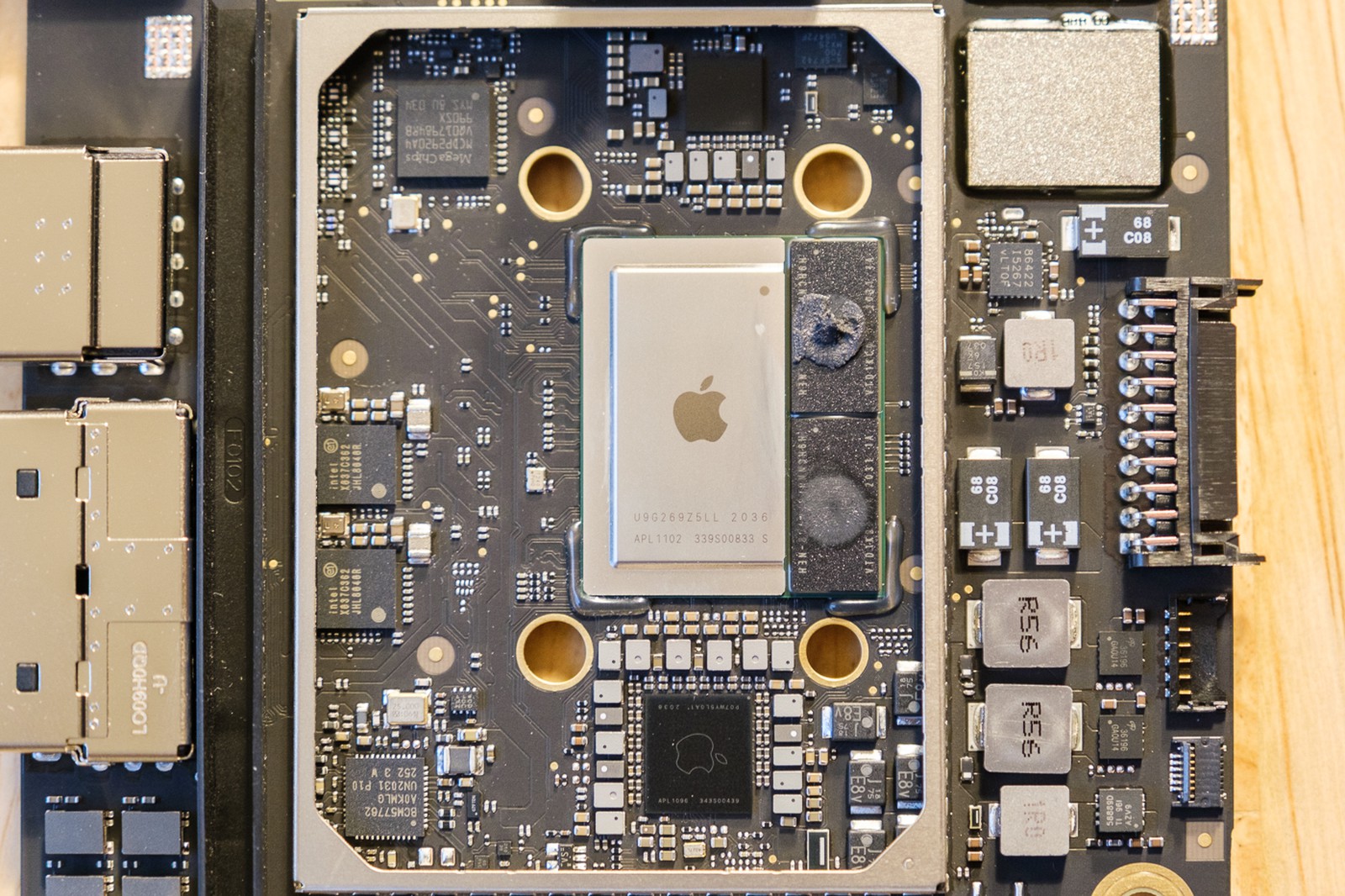
IIRC modern Apple devices integrate the memory into the whole SoC instead of making it separate on the board and replaceable. It's definitely not swappable like a DIMM or CAMM module would be. Can't find a photo of a decapped M4 chip to prove it, though...
I read somewhere (don’t recall where) that Apple typically enters into contracts for RAM on a six-monthly basis and avoids longer term ones. Even in the current situation since last year, it has avoided getting into multi-year contracts like the AI companies have.
It’s certainly possible that the AI companies and their prospects may get a true reality check and then memory prices could cool down in a year or two. If that happens (I personally believe there is a good enough probability), then Apple will come out looking prescient for not getting locked into long term costly contracts.
It remains to be seen for how long the investors in the AI companies are willing to wait for total market capture and/or growing profits.
> I read somewhere (don’t recall where) that Apple typically enters into contracts for RAM on a six-monthly basis and avoids longer term ones. Even in the current situation since last year, it has avoided getting into multi-year contracts like the AI companies have.
* when interest rates are declining, that’s a feature not a defect
* when interest rates are rising, that’s a defect not a feature
Southwest Airlines built its business on these kinds of bets.
Tbf, this current era of capitalism really is a lot where absolutely no one wants to enter the market and take advantage of a clear overpricing of memory for consumers but simply wants to charge the same amount as everyone else. So much for "efficient markets."
Everyone always wants to charge as much as they possibly can, and if SK Hynix would be the only manufacturer prices would be 10x of what they are today. Especially new incumbents will not ruin the market prices as they have the highest upfront cost and their calculation of entering the market is probably based on the high prices that can be achieved. In the long run, more competition is still good as everyone ramps up production to profit more from the high prices and at some point supply will outpace demand and prices will fall (assuming no cartel / price fixing is involved).
> Aren’t prices sky rocketing precisely because of excess demand?
Not exactly. The RAM crisis was sparked by OpenAI contracting with multiple vendors to take vast quantities of raw, unfinished wafers off the market. Wafers which OpenAI had no use for -- they just wanted to starve competitors.
This is different from an "AI is so popular that manufacturers can't keep up with demand" story.
OpenAI and Anthropic are the sleaziest companies that have come out of Silicon Valley in a long time, and that's really saying something.
I think you are splitting hairs. Both arguments boil down to 'AI companies are taking all the chips'. It doesnt really matter why, the result and reasons are the same.
Sorry, that was a tangent unrelated to the original point. Seeing people chalk this situation up to “high demand” when anticompetitive sabotage was the cause just makes my eye twitch.
It basically Silver Thursday all over again but with RAM. I wish they crash and burn like the Hunt brothers did, Altman goes the way of Sam Bankman-Fried and Micron gets bought by the Chinese. That's what they all deserve.
It all depends on the particular situation as to whether there is elasticity of supply or demand.
In this particular situation there is a bit of inelasticity of supply because it takes a long time to spin up a DRAM factory and if people believe it is temporary they won’t make the investment
US is stopping China to increase their DRAM and flash production as they would, by forbidding everybody to sell modern semiconductor manufacturing equipment and consumables to China.
China is increasing their production of DDR5 and SSDs, but much more slowly than it would have been possible in a free market.
The current prices for DRAM and SSDs would have never happened if USA had not started to sabotage the Chinese memory industry a few years ago, presumably because Micron wanted to eliminate their competition.
The US sanctions against memory producers have started exactly when Apple was considering the use of Chinese memories in their smartphones, so Apple had to cancel their plans.
The claims that the sanctions against the Chinese memory producers have anything to do with US "national security" or with military applications are just a big shameless lie.
Military applications are content with older memories, which China can produce in sufficient amounts. The SOTA DRAM modules and SSDs are more important for consumer products and the US "sanctions" have the only purpose of maintaining artificially high prices for the consumer products, which steals money from millions of people all over the world.
You don't want to build a huge factory if you believe the market might deflate suddently.
A lot of industries got bitten by greed and the sudden deflation of demand and huge unsold inventory post COVID. The reality is the market was overly and abnormaly inflated and consumers who bought the stuff during COVID period were equipped for the next ~10 years in stuff like sporting goods and had no reason to buy new items in the subsequent years.
I do believe we will always need more RAM even if there is a market correction or AI bubble burst whatever you want to call it. It will not destroy AI completely, just cleanup the market. But how much will we need? I guess the chip makers makes their own guesses but don't want to make their company in peril either.
But they are building huge datacenters for AI. The investment appetite is there. So there must be some worse bottleneck when it comes to memory itself.
The one building the datacenters aren't the ones making the chips. A construction of a datacenter can be halted suddently and an order of chips cancelled. We might assume that the chip makers are ready to supply said datacenters, just they don't necessarily feel necessary to build new factories for the consumer market which itself might not be ready to spend the same amount of money on RAM chips. And building factories do not magically create price reduction, quite the contrary. The consumers buying $150-200 smartphones aren't necessarily ready to buy $400 ones. Most would just buy on the second hand market and replace less often their phones instead.
Whales being whales, they will pay the highest end iphone at any price, no question. But the market is not made entirely of whales.
No, this is not Capitalism working as intended, because there is an entity, the US government, whose purpose is to sabotage those who are willing to increase production to satisfy the extra demand and decrease the prices.
So the market is not free at all, the lack of competition is maintained by force.
Already for many years, the prices of various products like smartphones, SSDs and memory modules have been kept artificially high by the anticompetitive measures called "US sanctions".
The iPhone is also a vehicle to hook people into the Apple ecosystem, where Services like the App Store bring in 40% of all gross profit with margins of 75%.
It could be that too. But just seeing Apple not raise prices on the face of it, that could be purely from taking lower margins. I'd have to dig into the last earnings call.
Apple hasn't had many models constrained by supply instil recently (Neo, Mini and possibly studio). The ram shortage doesn't seem have have hit them until quite recently. Existing agreements? They pay more to be prioritised?
I'm not sure how much of it is just an unintentional side-effect of greed from promises of international capital based in NY, and Dubai, and how much was intentional malicious behavior to destroy home compute to force people to pay for openai subscriptions, but the role of a functioning government typically is to keep corporations from doing exactly this.
Regardless of which one it is, I absolutely despise the cartel that is running the US government right now, that created this situation for their crony big tech buddies.
It is part of the global trend to "rent everything, own nothing".
High inequality means that everybody wants to sell to the hyper-rich individuals and corporations. And selling products and services to the working class is a losing money endebour.
So, money accumulation means asset accumulation, that means more renting, that means more money...
Well no one gets a free pass for too long. If prices rise consumers hold politicians responsible. Its just that the feedback loop plays out at different rates for the corps, cronies, politicians.
Ohhh look, the companies that started the problem have to raise the price! sure yes, I will not buy any product, untill price goes down. And others should do, but each on their own.
Price hikes on my food, home and now tech. I have a pocket and a voice, and I will stop buying any product.


The key takeaway for smartphones isn't so much that iphones will cost $150-200 more, which apple customers have shown they can stomach. But that cheap $200 chinese smartphones will need have to hike prices by about the same amount, which will decimate that market.
[1] https://www.youtube.com/watch?v=mDG_Hx3BSUE
reply