App stores and restrictive operation systems are a real threat in my opinion. We were really lucky that developers and users let at least the Windows store fail. You can earn good and easy money on those under the condition you get a minimal exposure, but I shudder to think this is the future of software.
I think Sweeney is correct, although I also think Epic tried to do the same. Their success with some of their games created capital that they used to create their own platform. Maybe as a defense mechanism or maybe because they wanted part of the pie.
If a larger developer like Epic has no recourse on store owners, the average developer will have even less. Remember the old times that actually isn't nostalgia? You could just install anything you wanted on your OS that respected your device. Great times.
The Windows/Epic situation really is the "best case scenario". You can download and install software from anywhere. Plus, there's an "app store" from the OS vendor, plus a few specality competing ones for things like games, where both consumers and developers have the choice of where they download/publish.
Epic competing with Steam has been a great success for everyone I think. Developers get secure funding for games that they otherwise wouldnt be able to make. Consumers get more games, plus they get hefty discounts or even just free games. Ideally we would then see Valve/Steam trying to compete in response.
Epic games exclusives are not the kind of competing I want, and they're not a win/win/win. I'm happy to buy games on GOG or the Humble store for instance, but I will never in a million years install the privacy and security nightmare that is the Epic Game Store on a PC I own. Sure, steam is not perfect but they've not had issues on the scale of Epics software.
I've played thousands of hours of Rocket League, but still out of principle had Psyonix refund me after the switch to Epic. Similarly, I had to ask for a refund for my kickstarter backing of Diabotical, a game I do wish to try one day. I understand why James took the money... but it's upsetting that the cost was exclusivity.
> I will never in a million years install the privacy and security nightmare that is the Epic Game Store on a PC I own.
It turns out that in a surprising number of cases, you don’t have to. Control, Journey, and Beyond Two Souls (as of this writing, it launched with Denuvo) are all completely DRM Free and will run without EGS. You can download them via the open-source “Legendary” unofficial client, or even in a Virtual Machine if you feel so inclined.
There are a tiny handful DRM-free Steam games but in my experience, it seems to be way more common on the Epic Game Store, particularly for AAA titles. I’m not sure if this was intentional of a happy accident, but it’s caused me to choose EGS for several titles recently. Mind, you still need to check before buying!
They are free of "third party DRM”, they are not free of first-party DRM, aka the DRM system integrated into Steam.
If you buy Horizon: Zero Dawn from Steam, you won’t be able to actually start the game unless Steam is installed. However, if you buy the game from EGS, it work fine even if EGS is not installed. The EGS version is a completely standalone copy of the game that does not require any clients in order to run.
This are a handful of Steam games like this as well. One example I purchased recently is Ori and the Will of the Wisps, which I downloaded in a VM before moving over to my main (Steamless) Windows install. It works fine. For whatever reason, however, this seems to work far more often with EGS games, and I really appreciate that!
Edit2: By the way, I mentioned in my parent post that Journey was DRM Free on EGS. I have just learned that as of a recent update, saving is broken without EGS (although the game still launches, and you may not need saving given its two-hour runtime).
I'm willing to chalk this up to a bug rather than anything malicious—and of course, the good thing about DRM-Free software is that if you've backed up your old copy, it will keep working, and no one can take it away from you. But, this type of thing is definitely a reason to still prefer GoG and itch.io where possible.
Steam used to be this way, I remember running skyrim without steam running. Would it change your mind if you knew EGS planned on going the DRM route in the near future (including for titles you just listed)?
Not really, I just want to buy games and play them without installing a client. Right now, these types of downloads are available from Epic. If Epic stops offering DRM Free games, I'll stop buying them.
The nature of DRM-Free media is that once I've downloaded it, no one can take it away from me. I may miss out on future updates, but I always make purchasing decisions based on what's available today, and not what may be available in the future. (And I don't play online multiplayer.)
The EGS version of Tetris Effect was DRM Free at launch, but DRM was added in an update. This means I can't recommend Tetris Effect to anyone who cares about clients or DRM—but on a personal level I don't particularly care, because I already got my copy!
Separately, if e.g. GoG was the only PC game vendor, they probably would never have made DRM-Free games a core focus of their business, because why bother when you're the only game in town? And so, I'll always welcome new entrants into the market.
>Control, as an example, is free of third party DRM on Steam
This statement sounds like the "no sugar added" label that you see slapped on high sugar beverages. Yes, there's no added sugar (or DRM), but there's still sugar. It's completely different to no sugar (or no DRM), as is the case with egs (as in, you can launch the executable without egs running), according to https://www.pcgamingwiki.com/wiki/Control
>but I will never in a million years install the privacy and security nightmare that is the Epic Game Store on a PC I own.
What issues?
Anyway, having to install a new launcher, as annoying as it is, is a far cry from throwing out your entire phone and all your apps, and buying a different phone (which has many of the same restrictions again).
I don't understand why people keep comparing the iOS App Store to the Epic Game Store exclusives, they not remotely the same.
They has some issues where people could use any email to register an account without verification, leaving thousands (millions?) without a way to register their own valid emails.
They were caught scanning your pc for everything to 'provide a better experience' if you had some things installed.
And if (want to think) they are 'fighting' for openness, 'buying' rights to games and taking them out of other stores.
All of them can be easily googled so not going to spend time providing sources
I tried googling, it definitely wasn't as easy as you made it seem.
The closest thing I could find for the registering without verification claim was a Verge article [1] about people's Fortnite account being taken over after clicking a link that was sent to them. If you have a better source please do share.
EDIT: Source has been found, apparently store didn't initially send a verification email so anyone could use any email[4], this has been fixed though. I could find no source for the claim that this affected millions or thousands of people.
As for the claim that they were "scanning your pc for everything", that is just completely wrong. According a few articles [2][3] they were reading your steam friends list after getting permission from the user.
And the following miriad of people showing that Epic is getting much more info than it says they do, even before asking permission (including even steam's games play time)
(it was the top post for me searching 'epic games store scan entire pc' btw)
Regarding the email thing, I said thousands (maybe millions) as I have no clue of the number, but remember easily over 300 comments in a'me too' kind of way on reddit when this happened.
> The current implementation is a remnant left over from our rush to implement social features in the early days of Fortnite. It's actually my fault for pushing the launcher team to support it super quickly and then identifying that we had to change it. Since this issue came to the forefront we're going to fix it.
Epic "exclusives" are really just Epic purchasing customers.
The publisher sells their fan base to Epic, and Epic gets a list of potential people they can sell their own crap to, and gets a big install base number they can leverage to convince more publishers to sell them more fan bases.
#1 the publisher wins because they don't like risk in the first place, and free money is free money
#2 epic wins because they build legitimacy and reach, and they sell more fortnite MTX to their burgeoning install base
#3 the developer loses because their brand is tarnished and their potential for future titles is damaged due to lower sales numbers and shredding their fan base
#4 the players lose because they lose choice and have their library locked in a 2nd rate predatory ecosystem
The players experience a first order loss but may achieve a long term second order gain as increased competition leads to better profits in game development, therefore encouraging more investment in games and potentially better games. I don't really agree that the developer loses. They need to get paid and presumably they are making rational decisions about which publishers to work with and transitively about their sales model.
There's zero evidence backing up any of your claims that developers or players "lose" because of these exclusive arrangements. Unlike the militant HN crowd, the average gamer doesn't give a crap if they have to install a client. Feelings are not facts.
> Epic games exclusives are not the kind of competing I want
EGS represents the choice in the market, and the market can act on that. Developers have the choice to go on the store, and they have the choice to take exclusivity agreements, or they can choose to go on steam or to offer direct downloads. Customers and chose whether they want to purchase a game from EGS, or go elsewhere.
"a product exists that I don't like" is not "bad competition". If you don't like Epic Game Store, then continue to not use it and go to a competing service/game.
Isn't it great that you have that choice! That's the marketplace at work. Now imagine if you developed the same privacy concerns about the Apple App Store.
It's the "best case scenario" for developers and Epic, but not for me as a customer. I vastly prefer the iPhone model where I can go to a single place to download all the apps that I need with a single payment method. I don't have to go to a specific url in the browser, download an executable, install a separate store for each game I want, and then finally install the game from that separate store. I don't know who would call this as a superior user experience.
You guys are acting like the existence of the App Store has jacked up the app prices by 200%, whereas in reality there hasn't remotely been such a thing since the inception of the App Store.
I really dont understand this argument. What about allowing alternatives forces the current state to go away? Why would other stores create a scenario where you _cant_ go to the Apple App Store and use your Apple pay and get your Apple approved apps?
I saw the same thing come up when people talked about wanting to maintain status quo for in-app payment options. Because, again, adding additional choices does not just make your current choice go away. You can still choose that apple-blessed option if thats what you want. Unless, of course, it turns out that theres a lot of unnecessary margin being added on and its actually not a profitable business model when faced with competition.
I as a customer like the Epic Games Store. I even more like the GoG store. And I kind of like the Steam store, but least of these.
When I shop for games, I never pay the list price - ever. Well, maybe once every few years when I buy a game in the GoG store made by CD Projekt Red, which run the store but are also a publisher of AAA titles I really, really love. I pay full price for them because they really deserve it, and they get 100% of the well-deserved money if I buy in their store.
All the other games? I'll happily wait for a sale in one of the aforementioned stores, of which there are plenty and with huge rebates, because they must compete for me as a customer. First sales are usually coming just a few months after a games' release, and with lots of games to play still in my pipeline and less time to actually play them due to work, family and all that real-life stuff, I can usually muster the patience to wait for reduced prices.
Apps for porn site/porn games aren't allowed on iOS. There's many 4chan apps for Android, but none for iPhone. And apps frequently have to gimp themselves to get around this requirement, like Telegram where on iOS you cannot see 18+ chats you can see everywhere else.
Any example that will be provided the fanboys will explain why they themselves don't need that application. The big example are web browsers (but you all are happy with the new IE) , GPL apps and some very popular game called Fortnite you might have hear of. I am wondering if you can refund your iPhone because a month ago you could play this game and now it will be blocked.
The new IE from the dragging things down point of view. Microsoft did not dare to not allow other browsers on Windows and because of that we can complain about Chrome.
Internet explorer was actually a decent browser in its peak. The whole "dragging things down" happened later on because people kept on using really old versions of IE (mostly the one bundled with Windows XP).
The main problem with Internet Explorer in its hay day was that they did not play nice with other browser vendors and implemented features outside of the standard. Those features were then relied upon by website developers, causing many websites to only work on Internet Explorer. After all - most people were using internet explorer, why cater to anyone else?
Chrome is not quite in the same position as Internet Explorer was back then, but it's getting frighteningly close. There are several websites that only work on Chrome, and despite me not using Chrome as my primary browser I do have Chrome installed because for some websites I simply need Chrome. This is obviously very dangerous to the freedom of the internet.
Funnily enough Apple forcing iOS users to use Safari actually helps here. Because so many people use iOS and they need to use Safari, website developers need to cater to at least one non-Chrome web browser. That in turn makes it more likely they will also cater to others (e.g. Firefox) rather than relying on Chrome-only features.
I seen recently change logs like "reverting from webp to jpeg to support iOS users", so it seems to me that the lowest common denominator now is Safari.
No doubt it is, I'm just explaining why comparing Chrome to Internet Explorer makes a lot of sense. Having a single browser used by the vast majority of people is a bad situation to be in. Especially when that browser is developed by a company like Google.
Do you use a computer with MacOS, Linux, or Windows? Are you using any application not natively installed on your machine on install or not offered through the officially designating app store on your OS?
Can't speak for today (since I don't have an iOS device at the moment) and I understand that some of these things were eventually added as options, but when I used an iPad 2 back in the day, some of the things I jailbroke it for:
Systemwide adblocking, non-Safari browser that wasn't artificially limited, ability to connect bluetooth mouse (mostly for when I used the iPad to remote into other computers), modified keyboard with a number row, file manager, some minor homescreen/launcher tweaks for usability, and one that allowed non-iPad apps to run at a higher resolution (at the time, non-universal apps would run in the old iPhone res, but scaled up instead of running at the higher, newer phone resolution).
I'm sure there were other little tweaks, but the main thing was that there weren't any decent Android or Windows tablet options at the time and while the iPad did many things quite well, there were all sorts of little quality of life things that I was just used to having. They weren't included in iOS and there was no way to (officially) change the launcher or keyboard or any of those other things.
It would have been quite nice to have other software repos besides just the App Store which didn't require me to exploit security flaws to use. Instead I just stopped buying iOS devices after that iPad.
I'm floored that nobody else here on HN has pointed out that Syncthing is missing. Android, Windows, Linux, and MacOS all have native clients, but there's nothing for iPhone.
Apps that the totalitarian government ruling over you without your consent have decided should be banned.
The problem is that it creates a single point at which a state can impose restrictions on freedom, with no way to get around it for dissidents and other people who don't agree with it.
You the average consumer would love to play Fortnite. Your kid has been pretty downer lately since Apple banned it. All your child's friends play it but you would prefer not to spend extra money just to buy a console. You the average consumer need Fornite.
Well of course you're going to prefer an anti-competitive approach if you view competition as burdensome. This has analogies in many industries.
You should divorce your personal anti-competition desires from the non-personal discussion. Encouraging choice is often a better way to give more people what they want.
The competition is in the marketplace. I'm not sure what value there is in having an Epic store, an Apple store, a Google store, a Netflix store, a Microsoft Store...
Having choice isn't always better. I think the Apple iOS store is a very clear example where choice leads to negative experience for users. As I've mentioned before, Apple collectively bargains on behalf of users against developers. They enforce (albeit imperfectly) certain standards and force nefarious developers to implement things like sign in with Apple.
They only, and I mean only, affect of releasing developers from the App Store is that they'll sign on with some 3rd party store, and if you want to use Spotify, or Netflix, or Facebook you'll get it from a 3rd party store where they charge the exact same prices but then infest the applications with hostile anti-patterns, tracking, etc. That's it. When you advocate for "choice" here, you're simply advocating for the choice for users to pay the same prices they've been paying except also being exposed to anti-patterns that Apple is working to prevent. Choice in this case, is clearly bad.
I'll also add, I have yet to hear a peep from Epic w.r.t having to go through Microsoft, Sony, and Nintendo for releasing Fortnite via their locked-in app stores. The iPhone is no more or less a computing device than those are.
This is the same kind of response that used to be used when Google was discussed.
"Google is clearly making the right choice for me. Their motto is literally 'don't be evil'".
And in some respects it's true - A benevolent dictatorship is undeniably a great form of governance.
The problem (and this is a problem) is that benevolent dictatorships never, Never, NEVER stay benevolent.
At some point the guiding principles will change, or you will change, and you'll find yourself outside of the bubble you were so comfortable to live in.
Some of us are already outside of that bubble. I don't like not being able to run software of my choice on a device I (in theory only, in Apple's case) own.
Basically - I find this argument extremely short-sighted. It's trading any sense of long term thinking for the immediate convenience of letting someone else do the work for you in the short term. I have very, very little respect for this argument.
> I don't like not being able to run software of my choice on a device I (in theory only, in Apple's case) own.
I just don't find this compelling and don't really care about it. There are lots of products to choose from, you can build your own stuff, buy a generic phone and load whatever you want on it, etc.
> The problem (and this is a problem) is that benevolent dictatorships never, Never, NEVER stay benevolent.
Then new products will arise when this happens.
> Basically - I find this argument extremely short-sighted. It's trading any sense of long term thinking for the immediate convenience of letting someone else do the work for you in the short term. I have very, very little respect for this argument.
We routinely delegate trust in society to experts and other accountable entities. It's like saying we shouldn't have an FDA and everybody should just make sure they aren't ingesting something that will kill them.
Also, can you clearly articulate what exactly I'm losing here with a single App Store? So far I just see more cons than pros.
> Also, can you clearly articulate what exactly I'm losing here with a single App Store? So far I just see more cons than pros.
No. My whole point is that you're clearly happy in your benevolent dictatorship.
But it really doesn't suite me. I just told you the reason I'm not happy, and you handily dismissed it as "not compelling". Which is fine. For you it probably isn't. For me, not having root on a device I own intended for general purpose computing is literally a no-go on every front. It's not just insulting, it's a literal threat to my source of income. I find it just as crazy as if Volvo told me I could only drive on Volvo certified roads. They may be great roads (the best roads, which will never damage the car, guaranteed!) but I don't give a shit. I bought the car to drive where I want to drive. I buy a computing device to run the software I want to run.
So that said, my real problem here is that both major mobile operating systems currently operate under this model. Google is marginally better (by the barest of margins).
So you claim that a new product will arise when Apple decides that you don't fit in their dictatorship, but watching what's happening with Google and search right now... Well, I'll quote you - "I just don't find this compelling"
Google is still the only player in search. Youtube is still the only player in video. New products are at best fringe products that don't gain traction, because there's a clear monopoly effect in play here.
> No. My whole point is that you're clearly happy in your benevolent dictatorship.
I wouldn't call it that. I'm not really sure it's a dictatorship. But whatever.
> But it really doesn't suite me. I just told you the reason I'm not happy, and you handily dismissed it as "not compelling". Which is fine. For you it probably isn't. For me, not having root on a device I own intended for general purpose computing is literally a no-go on every front. It's not just insulting, it's a literal threat to my source of income. I find it just as crazy as if Volvo told me I could only drive on Volvo certified roads. They may be great roads (the best roads, which will never damage the car, guaranteed!) but I don't give a shit. I bought the car to drive where I want to drive. I buy a computing device to run the software I want to run.
I think the crux of the problem is you're buying something with different expectations than you should have. If Volvo in this case said hey we sell a Volvo car and you can only drive it on Volvo roads, then if you got mad you couldn't drive it on other roads YOU bought the wrong car.
There is nothing stopping you from buying an Android phone and rooting it. As an iPhone user, as you mentioned, I want exactly what Apple is providing, or else I'd buy a different device. So when you want to change the product I like for your own benefit, then we'll certainly be at odds and I'll continue to support and campaign to maintain what I desire in the iPhone directly against you.
> So you claim that a new product will arise when Apple decides that you don't fit in their dictatorship, but watching what's happening with Google and search right now... Well, I'll quote you - "I just don't find this compelling"
> Google is still the only player in search. Youtube is still the only player in video. New products are at best fringe products that don't gain traction, because there's a clear monopoly effect in play here.
Certainly disagree. Google has quite a few competitors, Amazon, Facebook, Apple itself (searching via Siri in iOS versus a web browser) not to mention incumbents like Bing and DDG who have taken a little bit of market share. There are alternatives that work just fine. As for Youtube, Spotify is coming after them and then you always have new products like TikTok, or streaming services like Twitch.
> Certainly disagree. Google has quite a few competitors, Amazon, Facebook, Apple itself (searching via Siri in iOS versus a web browser) not to mention incumbents like Bing and DDG who have taken a little bit of market share. There are alternatives that work just fine. As for Youtube, Spotify is coming after them and then you always have new products like TikTok, or streaming services like Twitch.
Again, we don't share the same perspective here. As a consumer, some of the products you've mentioned are acceptable substitutes. But I'm not just a consumer of digital products. I also produce them.
As a producer, there's really not the same sense of competition you seem to be implying here. Google owns 92.5% percent of the search marketshare (globally). Bing/DDG/Yahoo might as well be rounding errors in comparison. 90% of customers say that they primarily find new video content on Youtube. Vimeo is next. The products you've listed are not really direct competitors (and this is actually pretty normal, entrenched monopolies don't lose to direct competition, they eventually get replaced with paradigm shifts).
So to hammer home my point here - As a producer, I literally have to make results available on Google, and upload videos to Youtube in order to reach most of my audience.
Now - I also use those other services as well - I happily send folks to vimeo links instead of youtube, and DDG links instead of Google search. So at least I have some chance to promote those alternatives.
In Apple's case, I have to release on their app store. Except... wait a minute... I can't even try to promote a possible alternative! If you use an Iphone, you literally cannot choose to get my software through another channel.
They are enforcing their own store monopoly with their software dictatorship. And just like a car, no one is going to go out and buy a completely different phone to use my one app. It's just not practical.
> Again, we don't share the same perspective here. As a consumer, some of the products you've mentioned are acceptable substitutes. But I'm not just a consumer of digital products. I also produce them.
Sure, I'm looking at things from a more broad market perspective so naturally I won't look at the individual case you experience. In the case of search I see Google under tremendous pressure. If you start your search on Facebook or Amazon, that's lost revenue for Google. Those are insanely popular companies. The fact that you are looking strictly at web search and that marketshare I think causes your perspective to be different, and in my view inaccurate when looking at the entire marketplace. Put another way, I don't really care about declining monopolies.
> In Apple's case, I have to release on their app store. Except... wait a minute... I can't even try to promote a possible alternative! If you use an Iphone, you literally cannot choose to get my software through another channel.
They are enforcing their own store monopoly with their software dictatorship. And just like a car, no one is going to go out and buy a completely different phone to use my one app. It's just not practical.
It would be nice if you stopped throwing around terms like dictatorship so casually, especially given the connotations around that (murder, genocide, human suffering, etc.). I don't really see how Apple is a dictator any more than any other company is. They create a product, the iPhone. That device has certain features and capabilities. The fact that you don't have an alternative is a feature of the phone, because as I mentioned above it forces a collective bargaining situation for Apple on behalf of users. Why do you need an alternative to Apple's distribution network, and why should you not have to pay Apple for access to a revenue stream that they actually create and maintain? It doesn't make sense to me whatsoever that you would have that perspective. You just want to have your cake and eat it too, and I think that's greedy and unfair.
> And just like a car, no one is going to go out and buy a completely different phone to use my one app. It's just not practical.
Its' very practical. You can do it in an instance. iPhones have very high resale value. But people would rather have the iPhone and its App Store, over access to multiple app stores via Android, hence why they bought an iPhone.
>Also, can you clearly articulate what exactly I'm losing here with a single App Store?
The ability to shop based on price. The 30% fee is non-negotiable which guarantees a certain level of price gouging.
Apple is also known for implementing various anti-patterns and tracking, mostly related to promoting their own apps and cloud services over their competitors, so you lose any leverage you would have in getting them to stop that.
You would have a better argument in favor of an app store monopoly if there wasn't a huge conflict of interest with them producing the hardware and selling these other services.
I definitely shop based on price. I look at different products in the App Store and then I see what their prices are.
> The 30% fee is non-negotiable which guarantees a certain level of price gouging.
Well, if you don't want to pay that to get access to the user base that Apple created and maintains then don't pay it and don't have your app on the App Store. This is pretty easy. Heck, companies get around this all the time (Spotify for example).
The 30% fee is factored into all the prices you're looking at.
Your argument that apple created and maintains the user base would be a lot stronger if google and all of the other phone makers were not quietly waiting to snatch up any customers that got sick of apple.
> Also, can you clearly articulate what exactly I'm losing here with a single App Store? So far I just see more cons than pros.
I can think of some things that I haven't seen mentioned yet:
1) Cross platform app stores. I'd like to be able to purchase an app on one store, and automatically have access to it on Mac/Windows/iOS/Android etc.
2) Alternate web browser engines. It's hard to know exactly how much we are missing out on here, since web sites usually won't use features that aren't available on iOS. But web browsers might not exist at all if platform owners had as much control over app distribution in the 90s as Apple does now. There may be web-browser like technologies (apps that can host interactive 3rd party content), or extensions to existing web tech that never get off the ground because there's no way for it to run on iOS.
3) Emulators, game streaming services from Microsoft / Google, full featured steam link, indie games that don't pay $99/yr so aren't available.
4) App store with better discoverability and recommendations
5) "Premium" app store that isn't a race to the bottom with free apps that are designed around continued advertising / in app purchases. Could be related to (4)
6) On iPad, a wide variety of general purpose productivity software. Developer tools, etc.
> Then new products will arise when this happens.
I think the argument is it's already very difficult for new entrants in the platform space (for phones, Microsoft spent billions and failed), but the only reason app stores are not competitive is they are tied together with the platform.
There's certainly also been some benefits of Apple acting as a de facto regulator of application software. I think in a world where alternate app stores are allowed the Apple app store would continue to be a very important storefront that most developers would not want to skip (although Apple might want to make improvements to it in order to compete more effectively). Of course, other app stores would also have their own rules and hopefully Apple would continue to enforce automatic security measures like sandboxing.
2) Hm, I see your point but I'm having a hard time envisioning what I'm missing out on. As I look at the web browser ecosystem on desktop, what features are we missing?
3) Not sure why this isn't possible? I think it's more of a limitation of interface than anything. Also why isn't Microsoft making their Xbox app available on Linux or macOS? Hmmm.
4) Eh, the App Store can be improved but I think you're reaching here.
5) As you said, related to #4. I have yet to see a premium model work. I don't think it does for many applications.
6) Yea that would be nice for developer tools, but the other limitations I don't see. You can install Office, JIRA, etc. on iPad.
> I think the argument is it's already very difficult for new entrants in the platform space (for phones, Microsoft spent billions and failed), but the only reason app stores are not competitive is they are tied together with the platform.
Sure, but the same is true of aircraft engines, investment banking, and any other specialized industry. Huawei and others will be competitive and will emerge as serious contenders. It just takes time. I also disagree with your assertion that app stores are not competitive, I don't think they need to be competitive. They just host the software. It's like downloading Spotify and then being confused that you can't put your own songs on it, or that you have to pay Spotify royalties.
1) I’m talking about the convenience of purchasing (and easily accessing past purchases) of app stores, not logging in to each app individually. Many apps don’t even offer that.
2) The main things that come to mind are the same advantages of native apps vs web apps. Integration/access to native API features, CPU/GPU performance, etc. Web browsers can support these things but don’t always.
3) Those specific categories aren’t possible on iOS because Apple prohibits them! That is exactly why Stadia/xCloud isn’t available.
4) Discoverability is hard with tons of apps but it's probably not impossible to do better. There’s not a huge incentive for Google/Apple to fix this since they charge to advertise in the store, some other stores don’t do this.
5) I was thinking about console games here, Switch games are often pretty different from in app purchase based mobile ones.
I think the difference with engines etc is there are big network effects - people buy phones based on the ecosystem which is determined by existing market share. IMO this is why Windows Phone died and it’s not just a matter of enough money or technology.
Sacrificing freedom & rights for user experience and comfort, that's how we get dictatorships. Apple takes total control but we shouldn't worry because they are "the good guys" acting "on user behalf" ?
We have to distinguish User Experience (short term comfort) from User Respect/Freedom/Rights. Choice is bad for UX, but it is good for avoiding abuses.
If you download FB, Instagram, TikTok, etc. on the app store those are malwares that collect all your data and Apple is doing absolutely nothing about it. ICloud is not even end-to-end encrypted. Let's stop this myth that Apple provides actual privacy.
Apple doesn't care about you, they care about power.
If they need to put "Privacy" in their ads for you to buy it, they'll do it. If they need to keep malwares on the app store to generate revenues, they'll do it (but they'll make sure you believe you are safe thx to their fake privacy propaganda).
It's true other game platforms are closed but first we have more choice :
Mobile gaming = Google or Apple
Home gaming = Nintendo, Xbox, PlayStation, Linux/Windows/Mac, Steam, Itch.io, GameJolt, Windows store, Epic game store, Origin/Ubisoft/Blizzard, etc.
Second : it's not about gaming only, it's about the right of people to control the device they bought.
Iphone & Google have a far bigger monopoly and control on our life than an Xbox sitting in our living room, so it makes sense to worry about Apple and Google first.
> Second : it's not about gaming only, it's about the right of people to control the device they bought.
I think most people don't really want that right. Myself included. I like the iPhone as it is and don't see any advantages to changing the operating model. Maybe if you're a developer you don't like it, so in that case I just say too bad and just don't develop for the iPhone if it isn't profitable for you.
All this talk about "freedom" and "rights" is quite a bit of misguided grandstanding if you ask me.
"I bought an Xbox, where are my rights as a general computing device!11!" Give me a break.
If you want all this stuff to "change' then go ahead and start with making Blizzard allow me to publish my independent games on their App Store with no review process and no revenue cut. Make Microsoft let me play Nintendo Switch games on my Xbox. Make game developers make all of their games cross-platform, no more Windows-exclusive games.
>The iPhone is no more or less a computing device than those are
The iPad Pro, the iPad and iPhone is are not general computing devices, but more like gaming consoles? Wow.
Apart from that, gaming consoles subsidize or barely eke out a profit for their hardware, whereas Apple charges buyers a huge margin on the phones. I'll agree to the forced 30% cut if Apple cuts their phone prices by 50%.
Which would make a little bit more sense if they weren't also suing Google at the same time, but I guess at least they're going after mobile altogether at the same time.
It'll be interesting to see what happens. If they win this case (unlikely) it will cause a lot of changes. It really is an interesting case though. I see applications across multiple industries and services (Amazon, Best Buy, Wal-Mart, etc.) as well as Microsoft, Sony, Nintendo, and others.
If you can bypass the Apple App Store, I'm not finding a compelling reason that you can't bypass ANY App Store or similar product. If Nintendo sells a new console, they'll have to let you install any app store. Hell, why can't I create my own app store and publish it? Why only Epic?
Apps that would have previously been one time purchases that are now subscriptions because upgrade pricing is not a viable model in the app store are one example of a price increase that the app store has created (after the initial launch pushed many apps to $0.99/$4.99, admittedly).
Erm... that's because that's always been baked into the price of software/apps on the app store since inception.
Not sure how higher prices for consumer is great for the consumer. I get the convenience argument, but not every consumer is willing to pay higher prices just for that. There is a huge difference between a 2-5% fee like CC merchants charge and a 30% across the board fee on the app store.
The App Store is also a service for distribution. If it wasn't there, I would be forced to invest much more in marketing, cloud services and all kinds of "small things" which are not the primary purpose of my apps. If anything, my apps would be more expensive outside the store.
The parent comment stated the best solution was to allow both an app store and consumers the choice on how / where they get their apps.
If the default app stores provides as much value as you claim, developers would continue to distribute there, pay the fees, and consumers would go there for discoverability and convenience. Let consumers decide.
With options, consider maybe someone could provide those services even better / more cheaply and you also benefit as a developer.
You can only use one store, it will have missing stuff but you should be used with that if you only use Apple approved App Stores.
Also if I want to buy a subscription for soemthing like Intellij as a developer I would feel like garbage to use a store and give a 30% cut to Microsoft or Apple for the privilege of allowing me to install something, the developers deserve those money and a big corporation because they host some files.
You mean consumers need to download yet another gaming service collecting god knows what to get the same games they used to get on Steam? I've no problem with the Epic store, but their exclusives are a cancer and they cost game devs money in lost sales from me.
Surely developers don't have to release games as epic exclusives if they don't want to. Also, epic's cut is much lower that valve's (12% vs 30%). I'd rather buy games on epic so that more money goes to creators.
The never ending cycle of monopoly vs convenience. Let us forget the fact that exclusives make the game devs more money than they would've got otherwise and the games are eventually released on steam anyway.
> and they cost game devs money in lost sales from me.
I don't think the exclusives are good for users, but from a developer perspective this is an oversimplification. Epic is essentially pre-funding games.
If you're an indie dev who's been working on a game for 3-5 years, literally everything you have is riding on that release going well. It's incredibly stressful.
So suddenly this billionaire shows up and says, "no content changes, no interference, we'll just guarantee up front that your game is profitable. We'll just give you the money to justify the last 5 years of your life, and after 6-12 months you can sell wherever." Of course developers take that. Suddenly you have the freedom to be experimental, to make games that are personal and niche without worrying about going broke.
There's a real sense in which PC exclusives are bad for the industry overall, I don't like the direction the market is headed. But from a developer perspective Epic has been pretty objectively good for indie games. The lost revenue from not being on Steam means nothing if Epic is willing to fund your game upfront. Think about how much peace of mind that means as a developer, to not have everything riding on a single launch, to not have to spend months leading up to launch getting sick worrying about what's going to happen.
And also let's be real, from a user perspective we had Steam exclusives, even if Valve didn't directly require them. I buy my games exclusively DRM free, I won't use Steam or Epic. The number of games that refuse to release outside of Steam, or who tie their multiplayer and modding communities to Steam's servers have been a pain in my side for over a decade. There are games on GoG that are missing patches and that will never get multiplayer, because Steam just happened to release frameworks encouraging devs to make themselves utterly dependent on Valve's infrastructure.
I won't install the Epic game store on my computer. But at least a game that's exclusive to Epic games store eventually becomes non-exclusive -- on average, I'll end up getting access to it later. Most of the games that get released exclusively on Steam never get ported off and I never get access to them. It's a little bit irritating to hear people pine for the day when most devs were still effectively releasing store exclusives, just without any extra compensation and to a storefront that more people happened to use.
I know the dev gets a good deal out of it (probably more money than all the lost sales). It's still bad for the consumer (except if the title would never get released otherwise).
If a developer chooses to only publish on steam, that's not really the platforms fault, is it? I dislike that some games use steam login/servers as well, but there is a trade-off: those steam servers will probably exist 10 years from now, where a lot of multiplayer games simply shut down their servers and you're out of luck. If Valve open sourced their steam infra, that would alleviate problems with self-hosting those games while allowing the devs ease of use and guaranteed infra.
>I won't install the Epic game store on my computer.
I won't either, and neither would I install steam, except for inertia (250 games bought).
As far as my consuming goes, I've gotten a dozen or more quality free games off the epic store and in some cases steeper discounts on games than steam offers. It's only really a "consumers lose" thing if you're boycotting and "unable" to play those exclusives.
As far as devs go, EGS gives a better cut, offers stability with timed exclusivity deals, and arguably are the ones who forced steam to lower their cut to 30/25/20 on high sales figures.
> If a developer chooses to only publish on steam, that's not really the platforms fault, is it?
It's complicated. Using Steam's infrastructure for multiplayer and mod support means that the game will only work with Steam. Valve isn't stupid, the reason they offer those services is to encourage games to be Steam exclusives. It's not an accident that Valve has no terms or options for developers releasing on other platforms to tie into those same servers.
Now, is it nice for developers that they don't have to pay for servers and that they get an easy API to integrate with them? Sure. Is it good for the consumer? No, not in any long-term way that wouldn't also apply to Epic funding games.
I will make the argument that what Epic is doing is better for the consumer than what Valve is doing. Epic exclusives are timed, eventually games leave the platform. Valve's infrastructure changes the way a game is built, it has to be re-engineered to work anywhere else. If a game is tied into those frameworks, it's very unlikely that it will ever leave Steam.
For the most part, developers that use Steam's features end up releasing gimped versions of their game elsewhere -- you buy a game on GoG and it's literally just missing features. This is especially frustrating for mods, you get cut off from the entire community. I think fragmenting the PC market so that different versions of the same game exist on different storefronts with no indication of the "proper" place to buy a game is way more toxic and harmful to the end consumer than forcing them to wait 6-12 months to play a new release.
I agree open sourcing that infrastructure would go a huge way towards alleviating the problem. If GoG could offer their own multiplayer servers that were compatible with Steam games, that would be huge. Even better if players could set up their own compatible servers for GoG games, that would be amazing. But there's very little incentive for Valve to do that. They benefit tremendously from games hard-coding those servers and making them impossible to change.
And that's not to say that what Epic is doing is good. I generally think that we should be discouraging exclusives, or at least making it easier for users to move their games between storefronts without installing new clients. Buying games from the Epic store wouldn't really be a problem if they were DRM free and you could download them from a web client, at that point I wouldn't care about exclusives at all.
My point is more that I don't think that what Epic is doing is bad in a way that makes them unsuited to bring this case, or that the way they're disrupting the status quo on PC is uniquely evil or something. Pretty much any dev you talk to will be happy to see Valve getting more competition. We don't want Valve to be taking 30% of our game revenue.
> but their exclusives are a cancer and they cost game devs money in lost sales from me.
Developers are making an educated choice to take their games exclusive, in exchange for guaranteed revenue. Sometimes that can be make-or-break for a game.
You’re acting as if steam doesn’t have exclusive games either - I play Destiny 2 which is only available on Steam (on PC). I would not be surprised that larger games/publishers get negotiated terms on the store which comes with contractual exclusivity clauses.
> they cost game devs money in lost sales from me.
I still don't get how the exclusives are a good deal for the creators. They get more publicity and probably some extra money for the contract. But does it really offset the lost sales? There was a large number of times when I went though: this game looks awesome, I'll buy it, oh it's exclusive for whatever-platform-i-don't-have, ... and likely not remember about it ever again. I even bought similar games which are available on platforms I already have instead.
Epic pays the developer for X units sold before selling anything. Basically guarantee the developer to make at least that much sold. The developer still stands to make extra buck if the game sells really well (when selling more then those X units Epic paid them beforehand)
This is great for smaller devs as you basically have 0 advertising budget and rely on worth of mouth for your game to be a success or not. So you can take guaranteed money and pay yourself (and your employees) or take the gamble and hope your game sells well.
Also Epic takes smaller cut then Valve does on Steam. (12% vs 30%)
Also these exclusives to Epic are timed. So after a couple months the developer is free to publish their game on Steam/GOG/Windows Store/whatever PC platform (Epic store exclusivity does not apply for consoles)
Sadly the only alternative is to buy used, disc copies.
Digital collections certainly have privacy tradeoffs. Though I'm quite happy with many of the upsides: cross-play, automatic cloud save, (sometimes) cross-save, no disc swapping, fewer things to clutter my living space.
If the alternative is not publishing the game at all, or never on PC then it's still a benefit. Are any of their thirty party, exclusivity deals permanent?
If you want to play any Valve games without Steam then you're out of luck.
Having another store is a low barrier to entry.
Imagine there was only one store for groceries in your whole state. And when you go to court a chorus rebukes you for not selling your produce there instead of opening another nearby.
Have you tried buying a game from Epic on Windows?
The "Epic Client" asks you for payment details, collects all kinds of private information and doesn't let you do anything unless it's up to date and connected to the internet. (DRM hello?)
Then you go to the Windows Store to buy that candy crush ad that's been sitting in your Start Menu for no reason and oh surprise, they are asking for payment details again!
Note how you can easily just go to another provider (Steam, GoG) to buy the same content. Something you are forever and ever forbidden from doing if Apples data collection and terms bother you.
Epic purchases exclusivity whenever it can. Some games were kickstarted with the promise of being available on Steam until Epic gave them a sum of money to make them an Epic exclusive, screwing over their backers in the process. In some of those cases, Epic funded refunds to the backers, in others it didn't.
In plenty of cases this exclusivity also shut down cross platform support of the games. Fundraisers planned macOS and Linux versions of the games, but when Epic purchased exclusive rights they were effectively made Windows exclusives as well (Epic's store is only available on Windows).
I don't think "epic bought exclusivity" is quite right. Epic store pays a larger percent of the purchase to developers than any other store. Developers really want you to buy their game on the epic store. That's the real reason epic exclusives exist, developers don't want steam taking their money. Epic gives them an advance as an excuse, but developers would not agree if they didn't want epic store to gain market share.
It's not the same situation. I don't like exclusives either, but you still have the option to install games from other stores or publishers on your PC. The Apple situation is far, far worse.
Competition in platforms forces platforms to extract less value.
Steam has been taking huge cuts from developers. Steam also killed discoverability.
Game devs almost gave up on PC because steam killed the platform. Check out GDC talks on the "indiepocalypse".
Yes, Steam has a lot of nice QoL features on their 20 year old platform that 2 year old platforms don't have. But new platforms force them to, you know, compete instead of extract value from the ecosystem.
The consumer benefit is in terms of games that wouldn't have existed otherwise because they're economically viable now.
The indiepocalypse happened because Valve made it easier to publish on Steam.
In 2009, 343 games were published on Steam.
In 2010, 308 games.
In 2011, 300 games.
In 2012, 377 games. Valve introduced Greenlight, allowing developers to create a page for their game and selling those that gathered the most interest.
In 2013, 511 games. Valve expanded Greenlight, lowering the threshold to enter the platform
In 2014, 1641 games.
In 2015, 2732 games.
In 2016, 4489 games.
In 2017, 6508 games. Valve introduced Steam Direct, allowing anyone to sell their game once they complete the paperwork.
In 2018, 8237 games.
In 2019, 7950 games.
When Valve was the gatekeeper, only a lucky few indie developers made it onto the platform. However, with less than 1 game being released per day, there was plenty of space for these new games on the front page. With over 21 games released per day, being available on Steam is no longer a competitive advantage.
Valve "killed discoverability" in favor of availability. Epic's store has advantages such as a lower cut, subsidized by Fortnite money. It also has disadvantages (not available in many countries, missing features, reviews, and social functionality). There is definitely a place for a smaller, curated store, where only one or two games are put out per day, which is what Epic is aiming for.
Steam is very close to a monopoly though. Not the store itself, but Steamworks integration. Most game developers use it because it's convenient, but it locks you to Steam. Often releases outside of Steam lose multiplayer support because of that, resulting in a crippled experience.
That is a prime example of exactly how it should work. Steam is cornering the market by providing value. Steamworks is exactly the kind of thing that justifies the cut they take.
One thing that has yet to occur but will one day, is one of these platforms disappearing and then a whole host of game libraries disappearing completely. We've all seen how some tech companies shut down, and supplying downloads and updates for downloads costs a lot of money. There's zero incentive for someone like Epic, Valve or Origin to keep their platforms working if the company goes bust.
I don’t want to maintain a games collection across several game stores. If a game isn’t available standalone or on Steam, I’m not buying it. I may still play it, but in that case the developer and publisher are not gaining anything - case in point, Untitled Google Game.
That's fine! What we want is for Epic to be able to compete. We don't think that every consumer should be required to use the Epic store. If the multi store model doesn't work for you, voting with your dollars to that effect is fine.
> We were really lucky that developers and users let at least the Windows store fail.
This might be an unpopular opinion but: I like the comfort of the Windows Store regarding installation & updates for Win32 apps. The app is installed into its own little corner and a lot of them also come with their own contained registry hive. I don't need a thousand auto update services or an app updating itself only when I open it. And the store requires extensive file signing so as long as I know it's the right developer, the need to manually check installer signatures goes out the window. And regarding minimal exposure, if you simply use it as a download source and redirect customers there, Microsoft takes only 5%.
I didn't like S Mode, Windows RT, the restriction to use just the store, etc. That shouldn't be forced upon the already-open PC platform. But I liked having a trusted channel for applications. (I don't mean that every app on there was trustworthy but you get what I mean, like above)
> I think Sweeney is correct, although I also think Epic tried to do the same. Their success with some of their games created capital that they used to create their own platform. Maybe as a defense mechanism or maybe because they wanted part of the pie.
That's what I think, too. Tim Sweeney likes to harp on about consumer choice, store freedom and such -- but with all the exclusives it's clear they just want to be the new Steam. They want you to have a big Epic Games Store library that you can't give up on, that you would always prefer to add to instead of going to another store. That's why they have these weekly free games, to get everyone to start a foundation of games without having to convince them to buy any for that to happen.
In my experience, Linux repositories are all of the upsides you mentioned (trusted, auto-updated, signed (at repo level, at least)) with none of the lock-in downsides, since you can add third party repositories (and then use them via the same workflow you're already comfortable with!).
But (official) Linux repositories are curated. App Stores need to be able to deal with submissions for borderline malware freemium games that could contain content that is illegal in some countries for political reasons, too much violence, porn, etc.
The Linux model works for a handful of trusted curators who only concern themselves with software worth their time... it can't deal with every single publisher who wants their content in your platform. It doesn't have to deal with issues regarding content for the most part (trademarks, copyright, decency, etc.)
Also npm has shown that open repositories, at certain scale, become fertile ground for malware. pip also had issues with this. I sometimes worry about homebrew, since it wouldn't be that hard to get malware in.
> The Linux model works for a handful of trusted curators who only concern themselves with software worth their time... it can't deal with every single publisher who wants their content in your platform.
Sure it can, anyone can set up a Linux repository. Some apps have their own repositories just for themselves.
The Linux model is great for curation, because having multiple repositories means that you don't have to grow to npm's size if you don't want to.
Arch is a great example of this. The existence of the AUR repositories gives the official repositories much more freedom to more tightly moderate what goes into them, and it gives me a lot more confidence that packages aren't being blindly added to the official repositories.
It's the opposite of what people are implying, having more storefronts means that storefronts can be stricter about what they apply. It means as a storefront owner you don't have to come up with one moderation policy that binds literally everyone in the world, so you can be a lot more choosy and subjective about what you approve and reject.
I like the Linux repos too but I don't want some smart-ass dev to decide that since 95% of users only install from repos then I should not have the choice to install from a tar.gz or God forbid some unapproved content.
Alternatives stores could also provide sandboxing,review and maybe even better support.
Is it possible to use something like SweetFX with Windows Store apps? Last I checked you didn't even have access to the where program's files are stored. It's designed to limit user freedoms just like the App Store is. Something like PCGamingWiki would be useless in a world where software was all distributed that way.
Late reply, but: Windows Store apps can also be Win32 apps nowadays and those are just layered somewhere in the filesystem. For example, install and run Spotify from the store, then check where it's running from.
Epic Store successfully taking games exclusive makes Sweeneys priorities clear: they are no different than Apple's or Google's. I hope Epic fighting this fight will not obscure that.
I wish people weren't so quick to jump to this simplistic "who's the good guy and who's the bad guy?" mentality. It's quite possible for Epic to be a bad guy in their own right and still have a valid grievance against Apple, and it's quite possible that it would be better for a lot of smaller devs that this was changed even if Epic is doing this for their own bottom line's sake, not because they are altruistic.
To be clear: I'm not painting Epic to be bad or good, just that they're as much after their bottom line as the incumbents. That produces a potentially beneficial change for the incumbent platforms, but also a potentially negative change in the same way that having another video streaming service with a proprietary library does not add value at this point.
I don't think Sweeney wants the same software to be available on every app store. He wants users to have a choice of which app store to use.
Effectively he wants the same deal as there is for PC gaming - eg multiple stores available that users can choose from - to be the case for mobile (and possibly consoles as well).
Well evidence shows that at least his stores tax is much smaller (12% on Epic store vs 30% on Steam). But he has been pretty clearly on the side of "everyone should be able to create whatever software they want on every platform" for a really long time. For example look at his rants against Windows Store and the potential path from it to locking down Windows iOS style (while very unlikely to ever happen is/was a possible path if the Windows Store got really popular)
> I'm not sure how that's a benefit for users (multiple app stores).
The same way multiple grocery stores benefit customers. It gives them a choice.
> What he wants is the right to build his own App Store so that he can charge his own "tax" and (hopefully) become a monopolist.
That makes no sense because once the door is open for multiple app stores, there's even less of a chance to become a monopolist. To become a monopolist Epic would have to build their own smartphone platform and get enough market share to effectively control the market, like Apple has done.
Also, when using the generic term it's app store, not App Store. Apple does not have a trademark on the generic term app store [0], they have only registered for that trademark and they will lose even that if challenged. Apple is so petty though that your iPhone automatically capitalizes it anyway.
Its a huge benefit, with competition the "taxes" would compete and developers would try to favor those with lower taxes, plus Apple store and Play Store both forbid adult apps because they want to be "family friendly", if the user wants to install the pornhub app on their iPhone they should have an easy and straightforward way to do so.
How in the world do you not see competing app stores not providing value to consumers from a price competition perspective? It's not like every game on every platform on Windows is a platform exclusive. I've availed of exceptional prices on games strictly because of competition across platforms, especially when one decides to offer up a sale.
Because on the PC, the oft-heralded perfect platform because there are multiple stores, there is no price competition? Epic giveaways aside (which is marketing, not competition), games go on sale on most platforms at the same time, for the same prices.
I, a customer, am not getting a price discount for a game on the EGS, despite the lower middleman cut.
> games go on sale on most platforms at the same time, for the same prices.
No they really don't. Spend time shopping around, games on Humble, GoG, and Itch often have different prices during different sale periods. I just got Into the Breach at 50% off on GoG a day or two ago, it was full price on Steam at the same time.
Different stores also cater to different niches: GoG prioritizes older games that wouldn't be updated for modern machines, itch has really experimental 'true' indie games. Neither one of those storefronts could handle the volume and diversity of both categories at the same time.
Unless you're only playing AAA games or something, I don't get the assertion that multiple storefronts don't increase consumer value. From my perspective as a user, they very clearly do. Having multiple storefronts has been a huge boon to the indie market.
> which is marketing, not competition
What on earth is the difference? Would Epic be offering those games for free if they weren't trying to pull users away from Valve? That's what competition is.
> They're not trying to pull customers off Valve [...] There's a difference.
Assuming this is true, is it a difference that matters? If the Epic games store didn't exist, Valve would not be stepping up and offering those games for free right now. The reason those games are available to you for free is because the Epic store exists.
As a consumer, I would have a smaller selection of discounted/free games each month to choose from if only one storefront existed. If Steam was the only platform, I wouldn't have been able to get Into the Breach at 50% off when I wanted to buy it.
Whether you think that's 'competition' or not -- I'm not going to argue over definitions, but whatever you want to call it it's good for consumers. You're still getting more stuff for cheaper just because another store exists.
> However, the discounted price while it's on sale is.
Same question as above, does this distinction matter? Would we say that Xbox and Playstation aren't competing with each other just because games generally sell for the same base price on both platforms? In reality, the price I paid between two stores was different. Why does it matter what the base price of the game would have been in a theoretical world where it wasn't on sale?
The end result of all of these situations is the same: as a consumer, I'm getting a greater variety of games at lower prices. The end result is that when I buy a game, there are pretty good odds that it might be discounted or offered for free somewhere at the exact moment that I want to buy.
And this is even ignoring the other perks you get from multiple storefronts such as the fact that you don't need to install a client to download games from GoG and Itch (not a service that Valve/Epic offers), or that GoG is going out of its way to track down rightsholders and get older games updated to run on newer systems (also not a service that Valve is prepared to offer), or that Valve is prioritizing Linux compatibility layers (which neither GoG or Itch have the resources to prioritize), or that Epic is subsidizing smaller studios and paying to get exclusives like Journey off of consoles and onto PCs (which is a service that nobody else is prioritizing right now).
Since when are exclusives an issue outside of console gaming? Even in console gaming - nobody cares that much. And furthermore, console gaming is not even nearly as important a market or as ubiquitous or as useful to society as smartphones are. The fact that some things are wrong with the gaming market doesn't really say much.
Anyway, app publishers like Spotify and Netflix have already offered lower prices when you signup outside of Apple's app store.
Sorry, but you're wrong. Giving customers a choice between shopping at Walmart, Target or Best Buy will always benefit customers more than only giving them the choice of Walmart.
There is simply no way in hell that you're going to convince me that having less choice is good at any level.
He doesn't force anybody to use the Epic Store. Unless you want to play Fortinite (which is made and published by Epic Games) or games that have an exclusivity contract with the Epic Store.
This is much, much different than the position of Apple or Google. They don't have to pass an exclusivity contract with anybody since they have a de-facto monopoly on their device. Want you game to be playable on iPhone ? You need to pay Apple rate, you can't just decide to go an publish your game on steam or any other platform.
Nobody is complaining that you can't have iTune on another platform. But for third-party developer, it means that you have no choice but to agree with Apple and Google rates.
Granted, the situation with Google is a bit different since you can technically install another store, but remember that Microsoft was forced to stop pre-installing IE on Windows and offer user a choice of browser. I hardly see how this is any different than the current situation of Apple / Google.
> He doesn't force anybody to use the Epic Store. Unless you want to play Fortinite (which is made and published by Epic Games) or games that have an exclusivity contract with the Epic Store.
So you're not forced, except when you are... I think the GP meant people is forced to use their store to play certain games. Games not developed by Epic, which were meant to be released in other stores and operating systems. You can choose not to play those games. Many people do in fact just that. But that was not the point.
Of course Tim Sweeney does not force random people at gunpoint to use their store. That's never going to be the case because there's laws forbidding him!
There's clearly a difference between a company having exclusive control over how people access a particular game on a particular platform (eg Fortnite on Windows) and a company having control over how people access all software on a platform (eg everything on iOS and Apple).
I don’t think there’s that much of a difference, unless you want to legally classify a platform differently. Today no such legal classification exists.
The problem is exactly those exclusivity contracts and how they were made.
Epic literally bribed devs to do deals that went back on promises, people are not just upset about exclusivity, they are upset about exclusivity of stuff they PAID FOR on other platforms, there were kickstarted games, games pre-sold for Steam, etc... that suddenly became Epic exclusive, and devs went and explicitly said they wouldn't even return the money.
It became an obvious pattern, whenever a game "became" Epic Exclusive, someone would be screwed by it, it is why people are so mad at Epic.
And before someone says that this is their way to compete... well, yes, a crappy one, their store suck, doesn't provide basic features, has no reviews for example, has a ton of dark patterns, it is super hard to get rid of your account or fix your account and so on.
Depends. You bought your groceries there? You paid their price.
You offered extra money to the grocer to sell to you something that was already sold to someone else that had already paid? I would count that as a bribe, and yes, it is a corrupt thing to do.
Epic is literally paying people to go back on their word, or in some jurisdictions, literally commit a crime by not delivering on purpose something that was paid for, in some places that is called interference, in others it is called fraud.
You can just install all game stores on Windows and there is no downside to doing so, and no real difference between installing the Epic store and purchasing a game there and buying the game on the game publisher's website.
Also currently Steam has a dominant position and 30% cut, and if the Epic store succeeds it will result in a more competitive situation with at least two game stores probably taking a 5-15% cut, which is a drastic improvement for everyone except for Valve, which makes Steam.
Same thing on mobile if Epic succeeds in the antitrust lawsuit with Google/Apple stores instead of Steam.
How does that benefit me, Joe Customer? I’m not getting a lower price by going to EGS. I’m just getting more friction in finding a game I want to play.
There are now more store-wide sales available ("Fall Sales" and whatnot). While at the developer's choice a game may have the same retail and sale price at different stores, since the sale dates are different, I the consumer am more likely to find and buy the game at the lower sale price. If you the consumer only want to purchase from one store it is still your choice to wait (just like timed exclusives).
Others have complained about Steam's lack of curation causing discoverability problems. It was at the height of this controversy that Epic launched their store promising better curation. Again, this helps consumers because not all consumers are alike. Some consumers do not want arbitrary moral decisions to block game availability, while others want this so that they do not have to wade through "garbage". Others, still, want to make that decision for all consumers.
I get free games from EGS, just like I got free games from Amazon App Store. For the same reason that the Amazon App Store exists, I can also get open source apps from F-Droid, including apps like Newpipe that aren't allowed on the primary app store on the device.
Do you wish that the Mac App Store were the only way to get apps on your Mac?
Free games are a marketing practice, nothing more. It's not a sustainable business practice, and it's paid for by Epic's exploitative Fortnight lootboxes. The "free games" will become part of a paid monthly subscription (or just go away entirely) when Epic feels like they have the audience they need.
And me? The value those free games might provide me is not worth the cost - being marketed to by a company whose values are quite the opposite of my own.
> Free games are a marketing practice, nothing more.
It's a marketing practice that would not happen without competing stores. The end result is user benefit.
> it's paid for by Epic's exploitative Fortnight lootboxes
Why does it matter to me how it's paid for? Does not allowing competing stores change where Epic or Amazon get their money? The end result is that I benefit from Epic and Amazon getting to compete.
> being marketed to by a company whose values are quite the opposite of my own.
I find Apple's values to be opposite to my own (selling low privacy devices and lying about it, preventing me from doing general computing on my devices, etc.). With competition, I would at least have a choice of finding an app distributer like F-Droid whose values are closer to mine were I to be stuck with an iOS device.
You still haven't answered the question about whether you would prefer if your Mac didn't allow you to install apps outside of it's app store.
If the game store takes a lower cut, then either games will cost less, or they will be better because at least some of the game developers will choose to use the extra money to pay more employees to work on the game.
Also, if there are more stores it's less likely that entire categories of games will be unavailable to you (or available but worse due to reduced budgets) due to all game stores having rules banning them, and in general game stores are less likely to be able to enact policies that serve them at your expense.
They don't. The prices, between MTX and multiple release versions, have gone up if anything.
> they will be better
Pretty close to unuantifiable. What quantification we have, critic scores, aren't showing any movement in the ~decade since Steam got competition (Origin, GoG, etc).
The only benefit seems to be for the shareholders and corporate executives thus far.
That’s not inconsistent. Users can choose to use the Epic store or not. If they choose not to use it, they can’t buy games from that store, just like I can’t buy Trader Joe’s food if I decide to not use the TJ’s store.
Exactly, people are having a hissy fit over exclusive content that has no further price than downloading a free store app. It's like whingeing about driving to another store to get the brand of ice cream that you like. I have no problem with that as long as the device manufacturer doesn't limit me to a single store. Preferably I'd like to be able to choose any store or independent content. More choices, more freedom, more competition.
It is in fact those three things. Different stores compete with each other providing different value, both users and devs having the freedom to choose to support one or the other (or all) based on their personal criteria.
It's up to the developers whether they want to sign an exclusive-deal with Epic (and of course up to Epic to offer one, because it turns out this is a very sweet deal which takes a lot of risk out of a game project, and especially independent developers would be foolish not to accept it).
Apart from Epic there are many other distribution opportunities on the PC platform. This is not the case on iOS. You either make a deal with Apple - and a very lousy deal at that, or you're not on iOS (the same problem exists on game consoles).
In all honesty Satan himself could have sued Apple for all we care, what's important now is that there is someone who has the resources and willingness to fight for our right to sideload apps on our own devices.
Sideloading is not the goal. The goal is to establish another store front to sell games with. This is no fight to open up the device, it's a fight to gain profit.
I don't give a shit about their goal. If they win precedent will be set to not only allow anyone to open a store, it'll be set to allow sideloading too. The outcome is undeniably good for me, that's all that matters.
If they set a precedent then it is likely we will get at least a few more stores if not an abundance. That's at least some improvement. There's an off chance of a complete opening up of iOS devices but I wouldn't bet on it.
Devil’s advocate: you’re free to run whatever you want on the device you bought, but some of the software you licensed prohibits you from running your software on top of it.
Also, actually running your software may be a challenge because the boot loader and OS are locked down, but you could have known that when you bought the device.
(This is similar to “right to repair”. That isn’t about being allowed to repair your devices, but about making it easier to do so. You’re free to repair your device, but it currently often is almost impossible)
exclusive games aren't the same as a monopoly platform. Exclusive games is a choice the creators of the game made. A monopoly platform is when that choice isn't available. If apple doesn't want your app on iOS, they can remove you with no recourse.
If Epic doesn't want your game on the Epic store, you have the choice to use steam, or to go alone and distribute independently.
People keep bringing this up as a negative, but ignore a) that many games are exclusively on Steam and b) Epic gives guaranteed revenue to developers, derisking development.
There is absolutely nothing wrong imho with companies wanting to make their own stores, set their own rules, with whatever exclusivity, to make money for themselves, AS LONG AS there is (fair and equal) competition in the market so if people (developers and/or customers) do not like the rules, they can go elsewhere.
EGS exclusivity doesn't limit distribution for other platforms, im not sure if this also applies for Linux as well.
Being on Steam does not guarantee the game will be on Linux. It sounds like your real problem is developers not bothering about shipping their game on Linux.
Valve did the same if I am not mistaken you had to install their launcher to play half Life. Now Epic is fighting back with similar tactics and as long as they offer a better deal to the developers, same or better prices for user then I am Ok with it (I did not install the Epic Launcher so far but I claimed a free game just in case)
If I ware Epic I would put Fortnie in Steam but make everything 30% more expensive in Steam (hopefully Steam let's the developer present users information like X is cheaper on Epic and is not like other companies that censors information they don't like).
With Fortninte on Steam the dudes that don't want to be bothered with 2 launchers can use only one(you still need Epic accounts like in all MMOs).
One of the most popular games is Minecraft and it did not need to be on Steam to get popularity, so it is still possible to host downloads for your game on your servers.
If Apple fought against one or many extractive ecosystems that would be a good thing even though Apple itself does profit and plans to continue to profit from their own extractive ecosystem. ...same with Epic.
Steam only reason to be as big as they are is because they went ages without serious competition, so anyone who wants to have the slightest shoot to succeed without such advantage must use exclusives or similar tactics or just die trying.
What? How about make a product that actually works? Epic Games Store is a slog to operate, with weird UX decisions across the board.
People hated Ubisoft trying to cram their platform down their throats because it was a buggy mess. People are disgusted with the EGS because, likewise, it is a disaster.
You don't need a Steam Workshop (a bonus, for sure,) to distribute games. You don't need the Marketplace for Game Economy stuff (a bonus, sure.) You need a way to buy and launch games quickly, which even EGS struggles at.
I've been thinking that the PC as an open platform was a "happy historical accident" that only happened because IBM lost its iron grip over the platform and failed to regain it because hardware clones and Microsoft were quick to jump into the opportunity that had presented itself because IBM didn't look for a second. And maybe Apple is looking at 80's IBM and is now afraid that the exact same thing may happen to them.
If this accident hadn't happened, the entire computing world would probably look very different. All the software giants like Microsoft, Google, Facebook, Amazon wouldn't exist because they couldn't have become big on a closed IBM-controlled platform. Apple might only exist because IBM let them live as the convenient underdog, same way as Firefox is being kept alive by Google to thwart off any suspicions that there's a browser monopoly.
Maybe PCs wouldn't exist at all and we'd be all sitting in front of IBM mini-terminals now, connected to the cloud running on System/360 mainframes.
You seem to be completely forgetting all the other PCs and home computers of their time like the C64 or the Amiga. Without Microsoft opening the market for clones the IBM PC might have remained an overpriced office machine and some other company would have created the most popular computer system.
In any case, none of these(not IBM, not Apple, not Commodore etc.) restricted what software you could run on your computer.
The PC started its life as a hobby platform. And there were attempts to challenge the open model - the game consoles for example required devs to license their SDKs and often controllers publishing / retail distribution.
But no one seriously succeeded with a closed PC experience because no one could (or wanted to) do it all - be a fully integrated retail ecosystem - at the time when facing consumers. The internet was arguably a prerequisite for this: all software was sold in physical boxes and unlike game software , the hobby experience meant there was just too much available that was cheap/free/shareware. (My favorite was the assembly hex codes published in magazines like Ahoy! That you’d type in).
Plus, the security of a curated store was on few minds until the late 90s with the internet. Viruses and Trojans existed but they were spread through physical media.
also, Microsoft already was getting its tax from users in the form of Windows licensing, which eventually was deemed anticompetitive due to their exclusivity arrangements.
The closest to a curated ecosystem started with Qlink, CompuServe, AOL and other online services.
Not forgotten, I was an Amiga owner myself ;) But somehow these machines feel like belonging to another universe today. Commodore management would have ruined the company either way, this didn't require any help from the PC. Atari would probably have focused on the games console business.
Anyway, it's fun to speculate about alternative futures :)
IBM did try to put the toothpaste back in the tube with PS/2 and OS/2 and especially with microchannel. The price points on those things were hard for most people to stomach. That reverse engineering white room case changed the landscape. Everything was bundled and IBM sliced it as fine as they could. I was looking to get a TCP stack for OS/2 at one point they quoted me something like 20k for a single seat licence as you needed the whole stack to make it work right. It was clear they wanted the business market and nothing else, with negotiated contracts all around. The hobby market had to go make their own. IBM had its own walled garden before that case. They milked it for all it was good for too.
I believe the current system for protecting iOS and its users could easily be split in two.
There could be two exit points from the review process. One would be for apps that don’t want to be on the App Store. They could be cleared as
free from malware, egregious behaviour, etc. and allowed to be installed through any independent means.
The higher level would be for apps that should be on the App Store. This means they meet the quality standards that Apple would like.
This would allow Apple to raise the quality bar for the App Store, while allowing indie development. Loading a non-app-store app could come with forced user acceptance flow, where you’re informed the app doesn’t meet Apple’s standards for user experience but has at least been checked for safety.
Independent app ‘stores’ would then be able to exist, and we’d have a compromise.
>There could be two exit points from the review process. One would be for apps that don’t want to be on the App Store. They could be cleared as free from malware, egregious behaviour, etc. and allowed to be installed through any independent means.
I don't see how such a review process would work for free software. The user should be free to run whatever software they wish on their own device.
The review process what makes iOS so useful. People can install random software in a way you can’t safely do on Windows. Sure power users might not notice the difference, but people feel safe hand their phones/tablets to little kids and let them install random games.
Scaling that review process across every update either means everyone pays a percentage which hurts large business or everyone pays a significant fee which hurts independent developers and discourages bug fixes.
iOS’s current sandboxing model is heavily dependent on the review process. It’s arguable what could be achieved in theory if they where going to let arbitrary apps be installed, but right now iOS on it’s own is simply inadequate.
> 1. And most anti-virus are considered a scam by most people
Many people consider iPhone prices a scam
and yet...
> 2. Apps that make egregious use of device APIs to implement tracking won't be flagged as a virus.
That's true for the iPhone as well
Apple itself track its users.
from a news report in the Washington Post
> Apple says, “What happens on your iPhone stays on your iPhone.” Our privacy experiment showed 5,400 hidden app trackers guzzled our data — in a single week
The point was that the check could be implemented by third party software on the device or by a software specifically crafted by the publishers, you don't need the Apple check, which is also very opaque.
You can do incredible amounts of harm to your PC without installing a virus. Ironically installing every virus scanning software at the same time results in massive issues.
This is the main reason why I had to move my parents from android to IOS. The free apks were ruining their experience and my work/support/life balance.
Apple wouldn't want to be responsible for something not in their store. They have all the downsides of verifying an app is safe but none of the upsides, worse they will inevitably be the ones who have to handle support.
Yes, this is not something that directly benefits Apple. Without external intervention, I don't believe any system which opens up iOS at all will be introduced.
What I'm looking for is - given external intervention, what would be a workable compromise that:
* Frees developers enough that they can produce applications without the full weight of Apple's process - and its rather hazy and inconsistent application - being a constant frustration or absolute block.
* Allows Apple (and its customers) to continue to benefit from their App Store model and its safety guards, protecting their security and (most of their) revenue.
I'm sure some customers would attempt to deal with Apple support for non-App-Store apps, but my expectation is that this would be a minority case and there are plenty of ways for Apple to head this off.
I don't know that it's a 'downside' for Apple to verify that apps are safe. This is a mostly automated process and one that they don't need to build from scratch. It's a cost for them - without an associated App Store revenue, but I believe it's reasonable to ask Apple to contribute at least this much to allow more open development for their platform.
Malware isn't really the primary threat. It's bad actors. It's specifically designed apps intended to rip people off. If an app goes through apples review process and then accepts credit card payment (which is the entire reason these apps want to bypass the app store) and subsequently use the users credit card details for fraud, who cleans it up?
The user will say that apple are culpable because it went through their review process, they approved the app.
I think more likely apple would reluctantly do the android model and just allow apps to be downloaded and installed via safari. The user is responsible for what they install, the risk is on them, they can use the app store if they want safety.
> They could be cleared as free from malware, egregious behaviour, etc.
It amuses me that you're using exactly the same language used to justify the App Store in the first place. Check out Steve Job's original "Third Party Applications on the iPhone" announcement between the time of iPhoneOS 1.x and 2.0, in October 2007: https://macdailynews.com/2007/10/17/apple_ceo_steve_jobs_sdk...
"We are working on an advanced system which will offer developers broad access to natively program the iPhone’s amazing software platform while at the same time protecting users from malicious programs."
The notarisation process is automated, scanning for commonly known API usage. In normal App Store review you get a real person to test and vet the app, the marketing presentation and if it works as advertised.
I strongly suspect that if Apple win this case against Epic and get an official court-sanctioned nod that their monopoly on iOS software sales is acceptable we'll see developer fees double or triple within a couple of years and the 30% IAP fee get ratcheted up to 40 or 50% over the next decade (unless you're big enough to negotiate).
Developers would make a bit less (although still more than they make on Android) and Apple would make a lot more.
For you a threat, for many others a feature. Lots of people buy iPhones specifically because they are restrictive, and are therefore more robust. Ask an average user which experience they prefer - sourcing software for a Windows PC, or downloading an App for an iPhone.
> Lots of people buy iPhones specifically because they are restrictive, and are therefore more robust
Just have a look at a mainstream Youtube video about the latest iPhone and see when they talk about the app review (hint: never). People buy phones based on camera, screen and interface, they never heard about the walled garden or Apple's practices.
Really? If you asked the average Joe off the street to list off the features of an iPhone compared to android, how far down the list do you think "app store review" would show up, if at all? I think most people would say stuff like "speed, camera, display, apps, privacy" then stop.
If you say "I think US people are happy of having the higher life expectancy in the World" reminding them that it is the lowest in the West is just revealing a lie
Epic has to step up their game, in order for google to compete in web, they made browser that better than everyone else and they made phone os that actually good to compete in smartphone world.
Epic has to do something similar. Sure thats not easy but given they are billion dollar company, they should be able to do it.
> I think Sweeney is correct, although I also think Epic tried to do the same. Their success with some of their games created capital that they used to create their own platform. Maybe as a defense mechanism or maybe because they wanted part of the pie.
I agree but people who are criticizing Epic for this are missing the real point. It is good if Epic can actually take a big chunk of the pie. Sure you could say they're being hypocrites, but from the point of view of users and developers, it's good to have more competition in the platform arena. Currently it's basically duopoly between Google and Apple. A new actor like Epic can change the dynamics and that is good.
Epic's platform is not a monopoly even if they successfully made one. steam is not a monopoly, even if they currently have a large market share, because the user is able to install their software outside of the steam platform.
Some games choose to not release on multiple platforms - but that's not a monopoly. And other games _do_ choose to release on multiple platforms, or choose to release independently of a platform. This means the best _game_ wins. Ditto with software.
> Epic's platform is not a monopoly even if they successfully made one
Same goes for Apple. The term "monopoly" is not really useful in this discussion. It's more about having a small number of gatekeepers. There are currently exactly 2 gatekeepers of mobile devices in the entire world: Apple and Google.
It is possible that Epic could get into a similar position as what Apple is today, but for games. My point is that I support something like this happening, even though people may think that Epic is just another gatekeeper. Gatekeepers can't be avoided, so the solution is to have more gatekeepers, so they can't abuse their power easily.
Whether something is a "monopoly" or not is immaterial to US antitrust law. What is relevant is concentration of market power and the facts of how it's being wielded.
> App stores and restrictive operation systems are a real threat
What we need is a true champion against this stuff. Someone who is willing to sacrifice normalcy and convenience to be fully committed to software that is free as in freedom, not free as in beer.
Imagine a "free software movement". It could center around the GNU toolchain and spiral out from there.
Now, where is our hero? We've put up the signal but I do not see him. I hope nothing bad has happened...
This assumes you want to install software from anywhere, or that you want your mom (who you suggested get and iPhone) to be able to install software from anywhere. For similar reasons that hardware admins don’t want you installing anything you like on company hardware, I don’t want my family installing anything they get tricked into installing on their phones.
There are other options out there where you can do whatever you want and side load, why not go use those yourself and stop demanding others be subjected to this same situation?
I have nothing against your mom, who I don't know, and I'm sure she's a fine person, but nonetheless, your mom is your problem. Why does your mom become my problem. Why must my freedom be restricted to protect your mom from herself on the computer?
Your mom is presumably able to drive a car, which is a killing machine in the wrong hands. Your mom can drink alcohol, smoke cigarettes, buy a gun, use a chainsaw. All of these activities are infinitely more dangerous than using a smartphone. OS lockdown in completely unjustified in comparison. It's a vast overreaction by "helicopter children".
This argument is silly because it can so easily be turned on its head: why should a closed environment be the only option? Why don't you stick to the app store, but allow others to do with their devices as they please?
I don agree, for example in case of android, you do have the option of alternative app store like f-droid and amazon, and is easy enouth for any user to install them.
And while of apple you don't have this, when you buy a Iphone your trading this liberty for stability and security.
For example, my mother loves to install little games from the store, but she agree with any terms and conditions that pops in the screen. So I feel more secure giving her an Iphone that I know the apps pass for more scrutiny before entering the store.
So I don't see as a monopoly, since you do get option of changing platforms and alternative stores.
I think in this case epic is in the wrong. They start this on purpose to involve the government in the history, just so they can take a bigger share of gullible people who spends to much on skins in fortinite.
Microsoft is apparently not one of the monopolies he wants stopped, because he is incredibly hostile towards Linux and Linux support for games. I can't stand this dude and his ramblings.
Hey there, I work in the Linux gaming space. Epic and Tim Sweeney are not hostile towards Linux. The worst you can say is they're indifferent (and can you blame them, given the size of that market?), but even that is not true. Epic's game engine supports Linux. Could they do more to support Linux gaming? Sure. But that's not the same as being "incredibly hostile."
Also macOS[1]. It was part of their upgrade to use a newer DirectX version[2]. Rather than maintain two renderers, they chose to end support for OSes which don't have DirectX support. If it costs more to maintain support for a platform than that support brings in, why would they do it?
Yeah, not only that but Linux users are known to be hostile to commercial software companies.
Given that, the microscopic market, and the additional programming complexity I don't see a reason why any game company should go out of their way to support Linux ever.
(As a Linux desktop user, I'm thankful when they do though. I'm so glad that Beyond Compare from Scooter Software works on my main workstation, for instance. Also Zoom, Slack and VS Code among others... Looking forward to trying MS Edge some day soon.)
No Epic Store in Linux. Repeatedly stated they've no plans to.
Meanwhile, Steam is doubling down with Proton. Since Proton, I don't have a Windows partition around anymore, it just works for an enormous number of titles.
Just because they don't want to build for and support a relatively tiny platform does not mean that they're hostile toward that platform. They support it in other ways via their game engine. Steam, on the other hand, has a vested interest in supporting Linux due to SteamOS, which they hope to pursue again in the future.
Just because Valve has a lot of goodwill in supporting Linux, even though Proton hasn't really affected Linux's market share in gaming, does not mean everyone else is actively hostile toward it.
Choosing not to support a platform which may not be profitable is not "incredibly hostile."
Don't forget when calculating profitability that you also have to account for opportunity cost: the devs you hire to work on Linux could instead be working on improving your fledgling client for the much more profitable Windows platform. Valve is already over that hurdle with Steam, so their profitability calculations will be different. You can't draw a direct comparison.
Like I said, I work on Linux. Trust me when I say there's a lot of very good reasons not to support it that have nothing to do with one's personal opinions of the platform, or whatever it is the OP meant by "incredibly hostile."
Exactly. He's just using keywords like monopoly and stuff to gather support.
And overall I don't understand why people take sides in corporate battles like any of those mega corporations stand for morals or the greater good or anything like that.
If you don't like having choices and you think choices are bad for people then perhaps you'd prefer to live in a place like China.
This lawsuit is taking place in the USA where people overwhelmingly value freedom of choice.
Speaking of China - Apple gave the Chinese government their own app store. Perhaps Epic should point that out as well. It would make for a great headline: Apple gives China their own app store, but not US!
Mate, I think Epic are bad guys doing the good guys’ work. Apple needs to be taken down a peg in the interest of the whole market, and sadly the only ones volunteering for the job are scumbags themselves. In the end there will probably be victims on both sides no matter what, because it’s always about the dollar and never about the consumer, sadly.
Not at all. I have and use both because half of my customers use one and the other half uses the other.
That’s the problem though. When half of the people in United States have no choice but to leave their digital home in order to get some rights to use their own equipment without begging Apple... that needs to change.
Let's not extrapolate your personal feelings on an entire population. The vast, vast majority of Apple users are very satisfied with their experience as evidenced by consumer satisfaction ratings.
Competition benefits customers. There is no competition for pricing on the AppStore, ergo the pricing is more or less free (A monopoly).
The store itself is so big as to be it's own market, and as such Apple shouldn't be allowed to use monopolistic practices even though they created the market themselves.
I agree wholeheartedly, and I sincerely hope that this process will end with Apple opening up. I just don’t think either side is completely devoid of consumer support for their practices.
Some corporations are shamed into doing the right thing, typically after an extensive period of morality-free cash-hoarding. Apple was just fine with their supply chain until news emerged of conditions down there (and Cook being a logistic guy, he’s clearly always known), at which point they hd to save face. Similarly, they keep saying they are green but have no qualms pushing out billions of unrecycleable and un-serviceable electronics every year, without taking any real responsibility for disposing of them.
think about steam whatever you want, but they've done some real fantastic work there with their linux support. the other day i installed forged alliance -from 2007, only supports win natively- on my linux machine and it was easy as pie: after a few mins of downloading and installing, the game was up and running.
It seems silly to me. Commodification of the platform would be massively beneficial for Epic. At the very least I'd be neutral towards it and just allow Valve to do all the expensive heavy lifting, then work on my own Linux compatibility and support in the background.
Well I guess this is my larger confusion/concern: only people in the gaming space seem to be seeing this for what it really is. Media outlets so far seem to be running with the 'Epic is taking on the establishment' narrative.
Hmmm, I remember Epic spending quite a bit of effort to get the Unreal Engine running on Linux back in Unreal Tournament 99 times, even hiring Daniel Vogel full-time to work on it.
I think a lot of people have short memories. When Apple launched the iPhone computer security was a disaster, the security of the AppStore was a massive benefit and the fact that we don't have massive botnets of mobile phones is in no small part down to the massive effort that was put into security. But they seem to have solved this problem so well that people have forgotten it was even a problem to begin with.
This line of argument is incorrect: It’s not the AppStore that makes secure apps possible: It’s the mandatory sandbox that apps run inside that actually makes the system secure. It’s fairly easy to push malicious code to the AppStore but bypassing the sandbox restrictions is what keeps bad apps at bay.
Yes, this is one of my biggest pet peeves and largest disconnects when reading these threads. I dont understand how people can accept apples privacy and protecting the consumer argument when that has nothing to do with the app store. That is iOS itself and its permission model.
Do people really think app store approvers are doing malware analysis on apps and analyzing network traffic to approve them?
I mean, both contribute to the security of the ecosystem.
There are plenty of APIs available within the sandbox that are meant to be used by developers to use for legitimate purposes. But those same APIs could be abused by malicious actors as well.
That is why Android has historically had more problems with malware even though Android apps are also sandboxed.
You could have good security with sandboxing without AppStore.
On the other hand the AppStore is full of spyware/malware (TikTok, FB, etc.) and Apple is of course doing nothing about it as it brings more user and revenues.
Not saying the situation is any better on other platform though
It is the other way around though. I firmly believe iOS security is driven by preventing jail breaks and homebrew apps to protect their AppStore revenue.
I used to develop games and apps for MS PocketPC. Our users could install apps straight from their PC to the PocketPC.
But guess how apps were sold: through portals. These portals also took around 30% (Handango and PocketGear were the biggest ones back then).
We were also selling straight from our website, where we could have had 0% cost. But guess what: We wanted to reach top 10 on Handango, and the best way to do that was send our customers through Handango. Once in the top 10 (front page), it would multiply our sales. So even on our own site we choose to 'lose' 30%.
Just take a look at Steam: it's PC games! You can sell all those things straight to the consumer. But developers still choose to give 30% (or how much is it now?) for the exposure.
Conclusion: there will always be some party taking around 30%. Why? Because it's well worth the 30%
It's the 30% + being feature/speech-restricted by Apple while also competing with Apple in Apple's app store which holds half the US audience captive.
Third parties can't even make a browser that gets set as the default that opens hyperlinks. They can't replace iMessage or the phone dialer. They can't even use a browser engine other than the one that Apple restricts them to. They can't make political apps. They can't offer porn apps. The list goes on and on and on.
Furthermore, smartphones are way, way, way more ubiquitous and important to society right now than those devices ever were back in the 90s and early 2000s. Imagine only being allowed to shop at Walmart or Target with no other choice anywhere at all. If that ever happened in the real world and those companies were acting like Apple is, things'd change real quick.
>Just take a look at Steam: it's PC games! You can sell all those things straight to the consumer. But developers still choose to give 30% (or how much is it now?) for the exposure.
What's your opinion on the following:
* pay-for-play "acceptable ads" in ABP
* having to get a EV code signing certificate ($300+/yr) to bypass windows smartscreen warnings, which are enabled by default
Are they acceptable? Are they a net good for consumers? They're all examples of optional programs that clearly provide value to the buyers (otherwise they wouldn't be buying it), in exchange for a payment to the gatekeepers. This is basically the same role as steam (or the portals). However, I have a feeling that most hn readers would not have a positive opinion of either of those programs.
> having to get a EV code signing certificate ($300+/yr) to bypass windows smartscreen warnings, which are enabled by default
Windows was a malware disaster before measures like this were added to the OS, so I would argue this (and other warnings preventing people from randomly clicking and installing things) are a net good for the consumer.
You also technically don't need an EV cert, you can get a regular code signing cert (it will just take longer to build your reputation).
I also don't like gatekeepers. But it just seems it always evolves to that.
My point was not that I don't mind gatekeepers, but more that if you get rid of the platform gatekeeper, you will end up with the "customers" gatekeeper. In the end for us developers or customers it makes no difference.
$300 should not be a problem for someone who sells proper software. Such $100+ gates keep a lot of the crap out.
Totally - the argument isn’t anything to do with developer’s not paying the 30% - it’s that a whole load of parties want to run their own stores without having to maintain the platform.
Just to be clear, this is from the article linked on the phrase "enormous farms":
"Through twitter, Sweeney said that when the land was put up for sale, many were concerned that the state wouldn't be able to buy it quick enough.
"He said he will own the farm to protect the land's rare oak and pine ecosystem until a permanent conservation home is arranged, which would take two to three years.
"According to the Wall Street Journal, Sweeney has spent hundreds of millions of dollars to preserve more than 45,000 acres of forest throughout North Carolina."
I think Epic has miscalculated the optics on this. There is no underdog in this story. It's just two enormous companies, run by very wealthy men, who put corporate profits and stock options above employee welfare, squabbling over how much of the pie they get to eat, when neither one can finish their first slice. I want them both to lose.
Epic miscalculated because they weren’t ever expecting a real legal battle.
They wanted Fortnite to get removed from the App Store in hopes that their rabid fan base of adolescent Fortnite gamers would create insane amounts of bad PR for Apple.
But It never reached critical mass and Apple stood their ground.
1. Multiple App Stores would be good for free speech, and for avoidance of USA cultural and legal hegemony.
2. How can this be done without loss of security for typical users? We don’t want phones to become botnets with microphones and cameras — imagine the opportunities for automatic criminal blackmail, theft planning, target acquisition, or 2FA interception. This is bad for the societies we live in even if we here on HN don’t personally install bad apps or bad stores.
3. It does feel like Sweeney is arguing in bad faith.
4. The the money is being raised as an issue implies these markets are now red-water rather than blue-water.
Most people don't understand the difference between "Google Play served a malicious app" and "Their Android device had a malicious app installed".
This is one reason Google Play Protect scans all apps installed, not just those installed through the Play Store. "That way, no matter where you download an app from, you know it's been checked by Google Play Protect"[1]
Oh, none whatsoever. This would have to be forced upon them against their will.
I just hope it’s done by governments who actually care about end users, not by those acting as though feudal aristocracy is the current economic standard and want a cut of Big Tech’s trillions.
Governments have always controlled it (SSL encryption ‘export’ limitations, for example); what we’ve moved past is the idea that those governments which control it are uniquely those which sit in Washington DC.
You don’t have botnets on iOS, but you do have the problem on OSX (can find many instances by googling it). The reason OSX have this problem is because they allow third-party app stores/installations. If Apple was forced to open up iOS then iPhones would also end up having all the same malware problems you see on Windows, OSX and Android.
I absolutely agree that ad networks are spying on users, and violating their privacy to an unacceptable degree — hence my point 1, because I prefer the EU approach.
However, that is not a botnet.
Those systems cannot, at least not to my knowledge, turn on the microphone in the background and listen for useful blackmail-worthy phrases without alerting the user (like Siri et al are presumably capable of); They cannot subvert the WiFi chip to be a wall-penetrating radar capable of pose detection, heart rate monitoring, etc [0]; They cannot snap random photos, finding out who has anything worth stealing, nor also revealing the shape of their keys for 3D printed replication (ditto audio, at least for the keys) [1][2]; They cannot read your email and SMS messages and take over your bank accounts [3].
Mr. Sweeney is welcome to make his own mobile operating system and charge whatever rate he wants.
He's personally worth $5.3 billion.
Surely that's enough to take Android Open Source Project and make his own version.
It's easy to burn down a store that you think charges too much. It's harder to make a new store that people will like. Maybe take the high road, Mr. Sweeney.
And you are welcome to build your own underwater fibre optic cables and network infrastructure if you want net neutrality. ISPs should be allowed to block any website for any reason or no reason whatsoever, including asking website owners for a cut of their revenue and block them if they refuse. /s
+1, Sweeney took the low road by violating his contract with Apple, removing Apple IAP from the existing Fortnight on people's iOS devices, and generally making a point by doing it the wrong way. Two wrongs do not make a right.
Epic didn't remove IAP... they advertised a lower price elsewhere, which is against guidelines (which is not a contract), and did so via an unreviewed update.
Note that updates via webview or JS code are explicitly allowed by contracts, and what Fortnite did is very likely to have used that mechanism.
Although this time his own OS should have basic features and lessons learned by prior entrants in that sector. Like, if you start an online store have such basic stuff as a shopping cart. Obvious stuff like that.
Apple's defense that they are not a monopolist in any traditional sense is correct as far as it goes.
But a novel definition of monopoly may be warranted. As smartphones become more and more a part of the fundamental infrastructure of society, and remain relatively expensive and slow to replace, it's not crazy to say that iPhone users are a market in itself and that market should be protected from monopoly. In the same way that a company in the 1800s might not have been a national or regional monopoly, but very much was a monopoly in their own company town, or how car manufacturers in the 20th Century were forced to allow competition in repair services.
I think ultimately, right now, my personal sense is that iPhones don't quite rise to the level of their own market that needs to be opened up, but it's close.
I think we need to view it from the perspective of developers who release internet-hosted applications; not consumers. Consumers do have some amount of choice, but developers generally have to release applications for internet-hosted applications on as many devices as possible (because mobile web isn't "there" (yet?)). Its not about App Store revenue or leveraging really powerful proprietary iOS platform technology; its just about eyes-on-glass and meeting customers where they are. Without iOS users, many internet-hosted applications would fail (see: Hey).
With app stores, its difficult to build correlates to traditional marketplaces, but I think about it like: imagine if Toyota decided to begin building roads that only Toyota cars can drive on, and Toyota cars can only drive on those roads. Toyota defers the cost of building these roads on-to the businesses the roads connect. Toyota cars are awesome, so many consumers want them. Some businesses greatly benefit from being on the Toyota network, but others find the fees far too high. And, additionally, Toyota can refuse to connect your business to their network, for any reason, and has a demonstrated history of refusing to connect businesses to the network for very poor reasons.
There is a good argument for the App Store to be made: It helps with security, with privacy, with convenience, its not all bad. But, I also believe freedom is more important than any of those. I think there's a middle-ground to be found, which looks something like forcing Apple to approve any application submitted to the store which does not break the law.
If you want to get a game on iOS today, you have to go through the app store+IAP or Apple Arcade or make a browser-based game. That comes down to: pay the Apple cut/tax or make a browser based game. This is the opposite of what Steam/GOG/Itch do: buy it once, play on 3+ platforms. Not allowing emulators/flash/alternative browser engines a few years ago might have been overlooked, but not allowing MS xCloud, GF now, Stadia, FB gaming while pushing Apple Arcade and individual app store game submissions definitely seems like an anti-competitive move to me.
This combined with offering pre-installed apps that compete with Spotify/news/video app store apps (at a higher price) and trying to force apps to add subscriptions through iOS like Hey and Wordpress, Apple has shown it's willing and able to exploit the monopoly they have on iOS users.
A platform-agnostic free market is more important than the iOS+Metal+AppStore monopoly Apple offers it's users IMO, if you must have a "guaranteed" walled garden, build one for yourself using privacy/security/parental controls. Every other user should be able to run the apps that they want and expect, and developers should be able to negotiate fairer terms.
The statistic I've found which illuminates this point to even people who know nothing about the situation: By revenue, Apple is the third largest gaming company on the planet, without making a single game.
Most people think about that for a second, then say "oh wow." Google is the only other company like Apple in the top twenty largest gaming companies, and at least they're trying to make some games and improve the ecosystem via Stadia. But Apple: they take 30%. For games like Fortnite, that represents hundreds of millions of dollars; have they actually provided hundreds of millions of dollars in value back?
> “As smartphones become more and more a part of the fundamental infrastructure of society”
This perspective underpins a lot of the pushback against Apple & Google but I just don’t understand it.
Any cell phone, and especially a smartphone, is not integral to modern society. Random usage by consumers is recreational. Businesses have a million ways to replace things they ask employees to rely on smartphones for. In fact not all uses of smartphones are productivity increasing, and it could easily be argued that we need better ways to just switch them off, whether at work or at home, to get things done.
An iPhone is like a video game console. Whether you use for seemingly “important” things like PagerDuty or day trading or checking your child’s location or hailing a car ride for a home-bound elder or sick person ... the smartphone is purely extra consumer gadgetry to do it and it could be accomplished many other ways.
Given that smartphones are just an optional, convenient luxury item, I don’t see how any argument about them being critical to modern society can possibly be used to claim Apple must be forced to operate its app distribution channel a certain way or cannot set its own monetization policies.
17% of people in the US use their smartphone as their only portal to the internet [1]. Is your argument that as long as they can go use a computer at a library that their smartphone is a luxury item? Access to the internet (or someone to access it for you) is basically a prerequisite for existing in modern society and phones are how people choose to do it most of the time.
This like saying "hey, if you don't like buying from standard oil, just get a horse!" when 1) you might already have a car, 2) you can't afford a horse on top of that, and 3) society has restructured itself such that a horse is not even viable in your day-to-day life.
We aren't really talking about OSes though, we are talking about software distribution. No one is trying to force Apple to let other phone manufacturers use iOS or force them to open source it.
Is advertising and hosting software so novel that it doesn't deserve any scrutiny?
Interesting how it was decided that the most luxurious manufacturer is the standard for accessing the internet. Like requiring driving a Ferrari to flip burgers at McDonald’s.
> Given that smartphones are just an optional, convenient luxury item
A smartphone is not a luxury item.
It is a productivity device.
It is a general purpose computer, no matter how Apple wants to say it isn't.
It is also a vital machine for participation in the democracy. For many it is the only way they can talk to others and to their government representatives.
> An iPhone is like a video game console
The minute that video game consoles have "games" that are text editors, file editors, web browsers, email clients, etc, they stop being gaming platforms and become productivity devices that replace the household computer.
What is a “productivity device”? You seem to think that’s some kind of platonic “thing” that exists, but it’s not. Web browsers, email clients, etc., are just discretionary products people may prefer to use for recreational or personal reasons. They are not structurally required.
You seem to be conflating the idea of “this thing is convenient for what I like to do” with “this thing should be supported as a pivotal component of civic life.”
Smartphones are absolutely nowhere remotely close to the latter.
> this thing should be supported as a pivotal component of civic life
Covid shows us that a smartphone is a pivotal component of your literal life. At risk patients now can have doctor appointments over video and electronic prescriptions. This mostly happens on portable devices.
These portable devices, despite branding and marketing, work in the same way to enable citizens to actively participate in the democracy (access to information, discussion, governmental resources, etc), their personal life (healthcare, family and education) but also on their professional life (working in a Uber-for-X, using maps, search, etc)
Portable and relatively cheap, smartphones are a necessity, a utility. You can argue that "not exactly", but it is what it is. The bigger and more ubiquitous something is, the closer it is to a utility and a shared space. Being part of a private enterprise is secondary and shouldn't take precedence over society.
When you replace the town square with your big backyard, it then becomes the townsquare
Covid has existed for less than a year, and cell phone for less than 40 years. People survived pandemics before either! It’s just crazy to say covid proves anything about cell phone being important or not important.
> “ When you replace the town square with your big backyard, it then becomes the townsquare”
> Any cell phone, and especially a smartphone, is not integral to modern society
Neither is hot, running water. A bucket and a hole in the backyard were good enough for my ancestors, they're good enough for everyone else in 2020!
Joke aside, are you saying online banking and payment is a luxury? Do you realize that many basic services are switching over to smartphone payment? Such as public transport fares.
The joke doesn’t land though, because hot running water affects septic systems, sterilization, and many other public health concerns that easily make it considerable as a public utility.
Online banking or smartphone public transit passes aren’t just luxuries, they are extreme luxuries.
For example, I don’t have any banking apps on my phone and I get mailed a paper subway pass every month. Same for millions of others.
No banking app is owed a slot in an app store, and no consumer is owed an app based workflow. Those are just products in a marketplace, nowhere remotely close to the concept of public utilities.
That’s a ridiculously myopic response. Most of the world doesn’t have adequate access to sufficient education, clean water, basic disease prevention, birth control, etc. But here you are acting self-righteous about online app-based banking and comparing the lack of convenient apps with poverty induced food theft? You need a reality check.
The same can be said about creating graphics / games engines such as Unreal and Unity.
As game engines become more and more a part of the fundamental infrastructure of games, and remain relatively expensive and slow to replace, it's not crazy to say that Unreal developers are a market in itself and that market should be protected from monopoly.
They aren't relatively expensive. There's tons of cheap android phones out there which have 80-90% of the functionality in an iphone, just with a much crappier user experience and terrible cameras, but they work!
Somehow people have come to the conclusion that if something is so good that they can't contemplate using anything else then it's a monopoly.
That's the reason my sense is that it doesn't rise to the level of it's own monopoly. But those "cheap" phones are still a major expense for a lot of people.
I heard a similar interesting idea on a recent episode of the Advanced Tech Podcast. Someone on there suggested that the mobile economy might be a legitimate market, and iOS has always had a hugely outsized share of the money flowing through app stores etc.
Following Apples way of thinking, Standard oil was not a monopoly. You could choose to source your energy from coal, power your train with steam etc. But the fact is that it was one.
That comparison would be calling every other phone on the market not just inferior, but entirely different technology. Seeing as they all can access the same networks and be comprised of varying hardware and use varying operating systems I just don’t think that’s true.
It’s like Apple being the sole supplier of a specific type of unleaded fuel. And people like me choosing that fuel because it might be more expensive and more restrictive, but I don’t have to worry as much about the condition of my car engine on a regular basis for using it.
There are plenty of other just as powerful, or even more powerful, fuels on the market that function on the same principles but with different features.
It would be more akin to Apple only letting you use the fuel that they sell for the cars they sell, just like Tesla did with their proprietary charging connector (before being forced, at least in the EU, to use a standard connector).
It helped me a lot with positioning Epic and Sweeney, with his current actions, into my mental knowledge base, in the context of Doom and what was happening in the 90s and thereafter in the gaming industry. It also touches the current topic. It's worth listening to.
Yes, it can be stopped. All Tim Sweeney is to do is build another mobile hardware/software platform and set the rules for app distribution however he likes. That is the way to beat a monopoly.
That's a really simple view of the issue. You can't reasonably think even a large corporation such as Epic can achieve that. That is what makes Apple/Google a duopoly in the mobile computing space. At this point, without any state intervention, they can abuse their position of power to bully devs and consumer.
I don't care that they had to "work hard" to get there or whatever; the fact is they now have too much power.
Apple & Google both did it, and are doing nothing to stop others from entering the (phone) market.
Just because a market is hard or expensive to get into doesn't mean it's not a market worth entering. The real crux is Epic doesn't actually want an open phone platform, they just want to be software rent-slurping middlemen for an arbitrary 'cut' of a pie.
The closer you are to the root of the tree, the harder it is to "build an alternative". It's the same for the road system, power distribution system, mobile platforms(Android, Apple), etc. I can't afford as a customer to buy a device just to play Fortnite, nor should I.
You can leverage existing alternatives, which they already do to some extent. Epic has invested massively in Blender, for example.
It's interesting that they've gone the 'pick a fight' route, when 8 years ago when Valve had similar concerns about Windows 8 they did as GP suggested and rolled their own Linux distro and made a bid for the living room space. That particular offensive failed, but Valve's continued investment in the Linux space now means that now, 8 years later, most AAA games without Anti-cheat or some kinds of DRM can be played on Linux seamlessly.
If Epic wanted to do likewise, they could invest in Librem 5 or Pinephone and make alternatives more viable.
That's interesting because indeed Librem 5, Pinephone, etc. could be indeed a unique opportunity for Epic (and Valve) to have their own mobile stores under their own rules.
Sure, currently it is insignificant, but so is Linux Desktop, yet Valve invests in Wine/Photon/Wayland/etc. and on the long run it might pay off when they'll have their own consoles.
I don't really understand Tim S. , on one hand he hates Apple monopoly, on the other hand he also hates Linux which is the only viable alternative, yet he still supports open source a lot (e.g epic mega grant)
Just because it’s hard to start a new tree when you’re at the root doesn’t mean the up and coming tree can hire a lumberjack to cut down the existing tree.
Apple did. They were worth approximately the same as Epic are now when they launched the iPhone. They hadn’t any meaningful presence in the phone industry and people thought it was ridiculous that they were trying.
Palm CEO Ed Colligan:
> We’ve learned and struggled for a few years here figuring out how to make a decent phone. PC guys are not going to just figure this out. They’re not going to just walk in.
Telstra COO Greg Winn:
> There’s an old saying — stick to your knitting — and Apple is not a mobile phone manufacturer, that’s not their knitting…
Microsoft CEO Steve Ballmer:
> There's no chance that the iPhone is going to get any significant market share. No chance.
In 2007, there were tonnes of people saying “Apple cannot feasibly do that” as well, just like you are saying it about Epic today. But Apple did it anyway and succeeded. Epic have that opportunity too, they could attempt to build their own mobile platform. Apple tried and succeeded. Google tried and succeeded. Epic could try, but instead they are asking the court to force Apple and Google to change their platforms to be more favourable to Epic’s wishes.
You misunderstand. People won't discard their iPhones in order to purchase a Fortnite phone without the iPhone apps. It is not feasible to even consider that.
I don't think attacks on Epic's sort of 'suitability' in fighting this dragon are really warranted.
Like godzilla vs. king kong, I think the only entities with the financial strength and influence to tangle with apple/google is going to be a bit of a monster in their own right.
My feelings about this do tend to vacillate. My opinion right now is sort of circumstantial, in that I don't think it's even tongue in cheek to call 30% the apple/google tax.
apple defends itself with the work it puts into maintaining app store quality. But imo enforced app quality and the store experience is something you sell to customers, not developers.
So apple talks about how there's so many free apps that never give apple a nickel.
I can understand differentiated pricing for different customers, but framing app developers as app store customers is where I feel apple and google run afoul. So it's like, why is it acceptable that mega-apps like fortnite are basically levied to support the app store, that apple turns around and presents to the customer and says "look how nice we made this"?
I don't know, it feels like the anti "developers, developers, developers". They don't have to make any concession to promote developers to use their platform, because there practically isn't much of a choice, between the two they're nearly the only game in town.
Crazy idea: if you want a free as in speech App Store then why isn’t the request for a free as in speech mobile OS?
The claim is there isn’t a company backing it - presumably from lack of market demand for it. There have been attempts but they’ve not gained steam. Even Google is now moving away from Linux as the core of android.
I generally agree that we need some countervailing pressure against the monopolies of today. But I can’t help to suspect there’s an argument to be made that turns the argument on its head: in a free market it is valid to tell someone asking for a product to produce their own desired good. If it’s a popular idea the implementation has a chance at being popular.
The counter to this would probably include lack of hardware to really target. Apples not letting anyone side load an entirely different OS on its phones, for instance.
Maybe that’s an angle to counter these monopolies without needing to go so far as to dissect them into smaller companies? Simply pass a law saying hardware and software should always be self contained goods - you can bundle them but have to offer them separately too.
Ninja edit- I think in that universe with self contained goods that hardware companies would have to make source code for drivers OSS (why should they care where it’s ran?) or enough information to make writing drivers possible.
I think its a bit of a chicken/egg problem here.
If there is no apps/appstore the OS will be a flop, but if there is no free OS there will probably not be a free app-ecosystem.
Used to have a Nokia N9, awesome phone, great OS, but there weren't any apps to speak of which I think is a large part of why MeeGo died.
Honestly the one way I see out of this is if web-apps largely replace native apps, which means that a new OS only needs to support a standards compliant web-browser.
That or get the existing actors to agree on and support an open 'app-container' format ...
There’s a reason the web once was a threat to Microsoft’s monopoly: it led to rich experiences they couldn’t control.
The web is so popular, Apple couldn’t block it. The trick to attacking them anticompetitively is to enhance the browser to take advantage of modern hardware capabilities and then go after the iOS browser restrictions as anticompetitive.
Google Stadia is an example of this arguably. But with things coming up like WASM I could see the browser being a local experience for games too.
Besides Fuchsia, that no one knows what it might be all about.
Project Treble kind of isolates Linux kernel from modern Android drivers, where standard Linux drivers are considered legacy, while Treble drivers follow a mikrokernel like approach using Android IPC to talk to the kernel.
Meanwhile you get a fortnite installer on every xperia that you cannot and may not remove...
He is probably right, not sure, but he only got on this high horse after Apple and Google told him to get f*cked when he wanted a special deal. So maybe he should sit this one out and let the relevant regulators handle it? He is just in it to cry in the media if you ask me
In the global economy, monopolies become a tougher situation. In some ways I’d rather not split Apple or Google if it were to mean a non-US company takes their place, particularly a Chinese one. I understand Epic Games is partially owned by Tencent, which if I wore a tinfoil hat, may concern me in regards to their motives here.
Well if I have to pick between my country being the top player versus another country, I’d still always pick my country (US). Though an EU or Indian company would be less concerning than Chinese.
Don't take me wrong, that's precisely the point - admitting and accepting your bias is the way to go, and that's fine.
It's just sad that the EU stance seems increasingly naive, the "lead by example" stance doesn't seem to work at all, and we're steam rolled between US and China.
Why isn't the EU stopping monopolies from acting in EU territory if it's in the EU best interest? Why not stop predatory takeovers? It's like we're just bystanders watching US and China... just sad.
The CCP puts the US/EU is a tricky spot because of their state sponsored corporations. On one hand, they adopt capitalism; on the other, communism. If the CCP can pump a near endless flow of cash into something that will compete with a major corporation elsewhere in the world, is this a bad thing? Would Amazon be a monopoly without Alibaba? Is it reasonable to hold the position that both Alibaba and Amazon should be broken up into small companies? I think so. The CCP certainly will not agree.
On one mind the app stores do provide a mechanism for security, that is of great value to end users. On the other hand, the amount they collect is way too large.
I'm wondering if there is a middle path. If one wants to use the app store to make your apps discoverable, you pay the higher fee, but if you just use the app store for distribution (and hence don't disrupt the end user security model) you can pay a smaller fee.
so how would users install apps without being able to discover it on the store? via the desktop (and not mobile, if we want to be strict) web. i.e. epic can give users a url that they can use to connect to google' web market (which already allow you to install apps to your device, and apple can do the same).
This would be the only way to install these apps (though updates would proceed as normal). if one searches for the app in the marketplace, it wont come up. And as I said, perhaps even on mobile the direct link to app wont work (though of multiple minds on this as well).
For app developers that need the app store to drive interest and demand, the 30% cut google/apple take is then reasonable. For app developers that can drive their own demand, they would pay a much smaller cut (perhaps 5-10%, with a decent chunk of that being the normal credit card processing fees that they would have anyways).
> Sweeney founded Epic Games in his parents' basement in the suburbs of Washington, D.C., in the early 1990s and grew the business into a $17 billion gaming empire.
Well that's one way to look at it. What made him really rich was selling out to Tencent, who just so happens to also have a mobile app store that they would love to get onto your phone.
A lot of the time i see people/youtubers mention that they like the benefits of the App store that would be gone if anything changes.
But why is this invalidated by allowing allowing the user to install software from other sources, allow a the user to install a browser that is not a skin on top of safari, allow non apple game streaming services on the platform, allow the use of images/text that mentions or shows competing software company logos/names, allow apps to show price differences in payment processing or allow established payment methods like PayPal to be used on the platform.
If would still allow the same user to only use apple pay or the apple version of their loved service of choice but also gives users that don't alternatives.
It is an incredible lack of imagination that people actually think this is the end of history with regards to mobile device operating systems, and we should just declare Android and iOS And their ecosystems public utilities that should be regulated by the government.
Because that really is the only recourse here to give people what they want.
Markets aren’t created by god, they’re created by customers. If you want to force the creation of an App Store market, one that customers aren’t actually asking for, it will need to be government-mandated.
Maybe there will be a weak sauce version of this where the review process isn’t regulated but the commission rates are regulated. We aren’t going back to the PC model where a thousand app stores bloom. No government will force that - there’s too much risk for malware and spyware as it is. At best it will be government-sanctioned stores with a government-sanctioned review process.
Windows once had 95% market share (still does!) and this hasn’t happened, even though Microsoft still gets a cut of almost every PC sale.
Be careful what you wish for. Folks here really haven’t studied history of antitrust beyond scanning Wikipedia.
There is a ton potential for new devices and platforms in VR, AR, and other experiences. The current state of affairs is not permanent. Most historical antitrust actions had very limited positive effects on consumers. The Standard Oil breakup, for example, is often cited. But it’s breakup didn’t really fix anything. Its children became bigger than the parent within a few years! Same with the AT&T breakup. It led to oligopoly. The only real telecom competition has been foreign entrants like T-Mobile. Microsoft’s consent decree had almost no impact on its monopoly status and revenue steam. What mattered was the market changing, to the point we didn’t care about the Windows monopoly anymore. There were other platforms that mattered in iOS, Android.
Valve has a near monopoly for PC game app stores and is poised to compete with Facebook and Apple for the next generation of VR/AR. Epic wants in on that. And likely there will be others.
> No government will force that - there’s too much risk for malware and spyware as it is.
Since when does any government anywhere on this planet care about "risk for malware and spyware" on operating systems? If they did, they'd turn up the heat on software developers in terms of responsibility for blatant security violations and security-related software bugs. The fact that no government does any of that tells us that they don't care about secure software. Some governments - I'm not calling names now - may even have active interest in insecure software due to their law enforcement and intelligence arms depending on security flaws for their work.
In the US alone, there have been have been several congressional hearings and FTC reports on malware and spyware over the past 20+ years. Microsoft was under significant political and commercial pressure in the 2000s to clean this up, and they answered the call.
Apple has every right to decide about their platform. What everyone else needs to do, including Sweeney, is stop developing for that platform and choose open/free platforms. Please go have a chat with rms.
Exactly my thoughts. It's their platform, their well-written rules, and Epic always knew it from the beginning. They intentionally made a move against a legal agreement, didn't take a step back despite the warnings from Apple/Google, and now paying a price. Don't want to be devil's advocate here but Apple/Google did the right thing.
I’ve been mildly vocal in my support for not altering how iOS works. I bought into it explicitly because of how it works.
Your comment is my preferred outcome as well. It would at least be a sign of good faith that they’re in it for the values they’re professing rather than only diverting money into their pockets.
Since this war is about making money from controlling access to the users, I don't feel like siding with either Apple or Epic on this. Letting the sheep decide by which wolf they will be eaten isn't that great of a choice.
From my own personal perspective, I would like to be able to permanently install an app that I developed myself, on my own Mac, on the iOS devices that I own without having to go through the app store or Apple's review process. But I'm not holding my breath that the outcome of this fight will deliver even that.
You can already install your own software on your own iOS device without review. You can even install it on 3rd party devices (up to 100) without review!
IBM was investigated for antitrust violations. After many years, they entered into a consent decree which required them to document all of their APIs. And not just that - they were not allowed to have any hidden interfaces that might place IBM application developers at an advantage over non-IBM application developers.
As long as you coded to the published API, you were good to go.
Doesn't matter if you like or dislike Fortnite and the Epic Store, Tim Sweeney here is correct.
Doesn't matter if people like it or not, but freedom of choice must be given to users and developers alike.
Choice should not be an option, but a basic right.
The people defending Apple and it's walled garden of life remind me of Socrates and his "Allegory of the cave"
( https://en.wikipedia.org/wiki/Allegory_of_the_cave ). This becomes a philosophical dilemma unless you believe freedom and truth should be absolute.
And you deserve to have it. Just let other users also use another platform if they want to.
That is what Epic is trying to achieve. Let there be multiple App Stores on iOS so people are free to choose.
You can keep using the App Store and be inside your curated platform or you can alternatively also use Epic's or Amazon's, whoever tries to make their own platform on iOS and Android, so that people are free to choose.
Either that or the App Store needs to be separated from Apple Inc. which makes the hardware. Currently, the App Store doesn't cover the user's best interests but Apple's best (financial) interest, and as long as it is under one company, App Store will always push to the benefit of Apple and detriment to all others. Think Spotify and Apple Music, Chrome and Safari, Google Maps and Apple Maps.
Allowing multiple app stores inherently breaks the 'curated' feature. It would make it like on my PC, where I have to install 10s of 'stores' to access individual pieces of software. Perhaps you think this is a positive thing, I don't.
One possible workaround would be for Apple to allow additional stores/sideloading, but all apps available via this method would need to also be available via the Apple store, if accepted. Not sure how this would be enforced though.
Nobody is forced to pay 30% eternally to Apple. You make it sound as though people switching to Android isn't possible, yet I know many people who've done it.
> You don’t have to pay 30% to Apple. Jail break your phone is you want or just buy one of the 1000s of other phones for. Sale
That's a completely unreasonable sales strategy for a company to take, telling their customers to jailbreak their phones or to purchase a different phone.
As a user of npm I'd really like to see some effort to create a framework for trust in open(ish) repositories. Something that includes signing, reputation (beyond "popularity"), trust network (people that vouch for your packages), automated verification to check for obfuscation, etc.
I mention npm because it's always in the news, and because it's a much smaller and simpler problem that a whole App Store.
If we could fix something like npm the solution could perhaps be generalized or built on to open trustworthy repos for all kinds of content. At that point we would have a very strong working argument against privately-run monopolistic app stores. Until then I prefer Apple as a benevolent dictator to mad-max style libertarianism. I need to use Adobe software for professional reasons, but I'd rather not have to deal with an Adobe app store... or an EA app store... or an Ubisoft app store... or apps stores from a variety of shitty companies with bad practices.
If Epic allowed users to create their own outfits and weapons and sell them in fortnite using the users choice of credit card processing service they'd have a lot more legs to stand on.
I understand these companies are all different and obviously different in size. But I still get a good feeling of the pot calling the kettle black here.
Not a monopoly, but they have a captive audience with one of the biggest gaming franchises of the current time.
Many of their current practices with the Epic Store could be potentially seen as being anti-competitive, but they are currently being given the benefit of the doubt because they are nowhere near as big as Steam.
Would it change at all if that half of the population chose to live there, knowing Walmart was the only store allowed to operate?
Would it change even further if people moved there BECAUSE Walmart was the only store that was allowed to operate?
And since someone will ask "why would you want that?". The analogy won't completely work, but I'll go with it. When my son wants to buy a bike, they go off and bike a bike. I can be sure that they bought it at Walmart, and that Walmart has done some work to make sure the bike is safe for my son.
If I don't have that, then maybe he buys a bike at "Joe's bike shop". Maybe that bike was made poorly in China. I don't know that the bike he bought was safe.
It's definitely a valid point. I've made the comment before that one of the problems of a more open App platform is that Facebook would replicate their malicious app advertising business on iOS and millions of people would have worse experiences with their phone because of it. It's ridiculous the stuff they're willing to push ads for on Android and Google are willing to host on their store, and it's no loss to iOS that suchs apps aren't available.
But a lemonade stand in a Walmart wouldn't necessarily harm consumers, and lots of things Apple blocks or requires a cut of wouldn't either if things were changed.
I apologize in advance for stretching the analogy so far here. But going back to my example, my son now goes into Walmart for a lemonade. The Lemonade stand is half the price, so he goes there. How do I know the lemonade isn't poisoned? Made with peanuts and not labeled as such? etc.. The argument would be that he doesn't have to go there, but that's easier said than done. I go to Walmart because I know that they verify their products.
Going back to an iPhone, the answer is usually "you don't have to use any other app stores". But what about if I _do_? What if I have to use the new Coronavirus test that requires an app? And the only way to get the app is to install Abbott's app store? Are you guaranteed that they aren't also consuming all your health information?
My view would be different if Android didn't exist, or if iPhone had a much higher market share. But for now, I'm happy to pay extra to be in the walled garden, because I trust the king of the castle to try to protect me (as opposed to figuring out who to trust out on the street).
For physical marketplace we should define relevant geographic market. A relevant geographic market is the area where they the conditions of competition are sufficiently homogeneous. For buying lemonade it's not the case that consumers can reasonably only shop inside Walmart.
I’m surprised to find myself siding with Apple / Google / etc on this. They did the work to build and maintain a distribution platform. They should be able to define its terms of use and costs. If you don’t like it, distribute differently. If everyone uses those companies’ devices, it’s a market endorsement that the world wants the standardization and managed ecosystem of each platform - that it’s a thing of value.
I don’t see how there’s any way you can tell Apple how Apple has to run infrastructure to support a distribution channel, but it cannot determine the prices or policies for someone using it to distribute an app.
Just because company creates market where products and services are sold, does not mean that the market is outside competition law.
> If you don’t like it, distribute differently.
Relevant market for networked multiplayer games can't be divided between platforms. People who own iPhones and Android phones play the same game online with their friends. Epic can't stay competitive and stay outside Apple AppStore and sell only for Android pones.
Sure Epic can. They can distribute their game as a fully in-browser web app, including building out all the infrastructure required to make this work (like Apple did). Or Epic can create standalone hardware devices that connect to their game network, do market research and user testing on what makes a good device, develop optimized supply chain and production systems to make the device realizable, and spend on marketing to convince consumers to buy and love the device, also like Apple did.
I play chess against people on any devices, through chess.com in a browser, even on my mobile devices.
“Epic can’t stay competitive” in that scenario is 100% Epic’s problem, they are not owed a slot in an app store distribution mechanism that they also don’t have to obey the policies of.
The costs and investment are not unrealistic or unreasonable. Apple paid those costs. Google paid those costs.
There’s a difference between saying “it would be really hard for Epic to recreate an ecosystem and hardware like Apple’s distribution channel” vs “it is structurally intractable or unrealistic in any way.”
If Apple & Google slogged through a decade of developing devices, app stores, manufacturing, etc. then so can Epic. If that’s really hard and Epic doesn’t want to do it, they can play by app store rules and use existing app stores.
The fact that it’s hard and expensive for Epic to do it their own way is no excuse to call other businesses monopolies. They aren’t doing anything that structurally stops Epic from building its own thing if it wants different policies.
Your argument is specious. It’s like saying the suggestion of building your own toll road is too hard, so some other toll road operator (who sunk capital into making their toll road) suddenly has to let you use it for free.
If they built the toll road, and they aren’t structurally sabotaging you from going and building your own if you don’t like the tolls, then this is your problem, and the other party exists as living proof that “this is hard” is not an adequate excuse.
You can’t cry monopoly just because you don’t like something and feel it would be hard for you to do it a different way on your own.
There is a technical definition of monopoly, and this case has a lot of people throwing around terms like “monopoly rents” with no relationship to the actual definition.
A monopoly means you have total control over a market and thus control the price of the market. Monopoly rents are where you can charge higher prices but people won’t go to the competition. Neither is true: app devs can charge whatever they want for their apps. The redirections are about stopping underselling across stores which is a common retail practice when they carry your wares.
This is a fight about retail markup. Epic knows they don’t have a strong legal case which is why they have the PR campaign. The only recourse will be to convince people to change the laws, because this case doesn’t neatly fit in the traditional antitrust model.
It is incredible that people actually think this is the end of history with regards to mobile device operating systems, and we should just declare Android and iOS And their ecosystems public utilities.
Windows once had 95% market share and that didn’t even happen.
Without that pressure Intel and Microsoft would have become even more evil. I think that MS and Intel needed a giant punch for the anti-competitive things they did or tried to do. Intel is still crippling AMD CPUs and they just have to put somewhere one the web a disclaimer(well hidden). If Intel could lockdown their CPU to run only Intel approved apps then Linux and the BSDs would have been hit hard, maybe OSX would not have existed (Apple used and still uses open source code)
They don't have to run infrastructure, they just have to update iOS to remove the signature check on binaries and support installing IPAs from Safari downloads, so that there is no need for their app store anymore.
As a consumer of Apple devices, I want the app store, and I only want app store software to be possible on the device. So if Apple needs to meet consumer demands, I’m an example of a consumer who wants the app store to work like it currently does, and I feel Apple’s policies of taking a cut of subscriptions and in-app purchasing is fair.
For a system where I want openness, I’ll use Librem 5 for example.


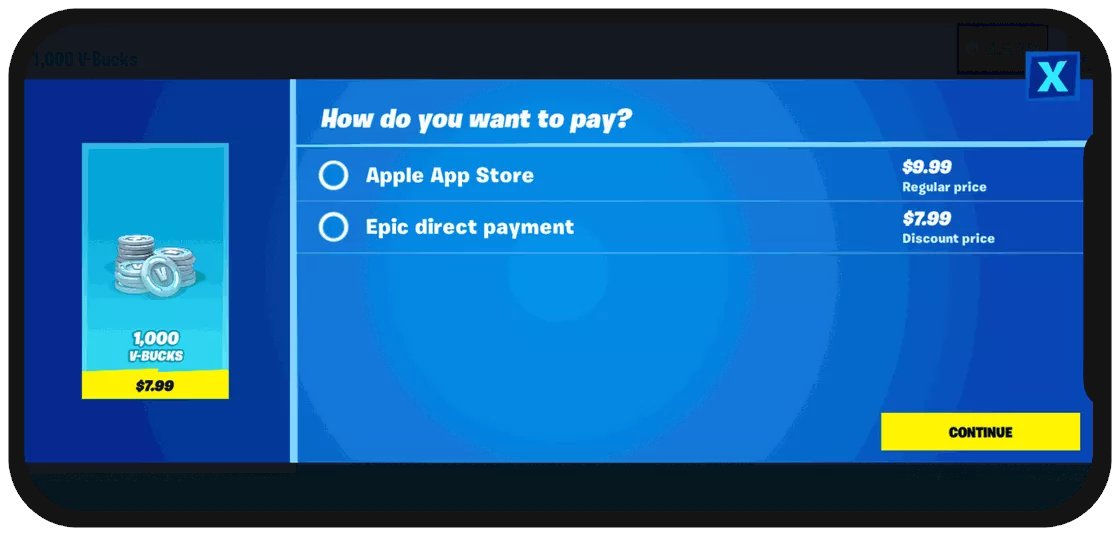
I think Sweeney is correct, although I also think Epic tried to do the same. Their success with some of their games created capital that they used to create their own platform. Maybe as a defense mechanism or maybe because they wanted part of the pie.
If a larger developer like Epic has no recourse on store owners, the average developer will have even less. Remember the old times that actually isn't nostalgia? You could just install anything you wanted on your OS that respected your device. Great times.